
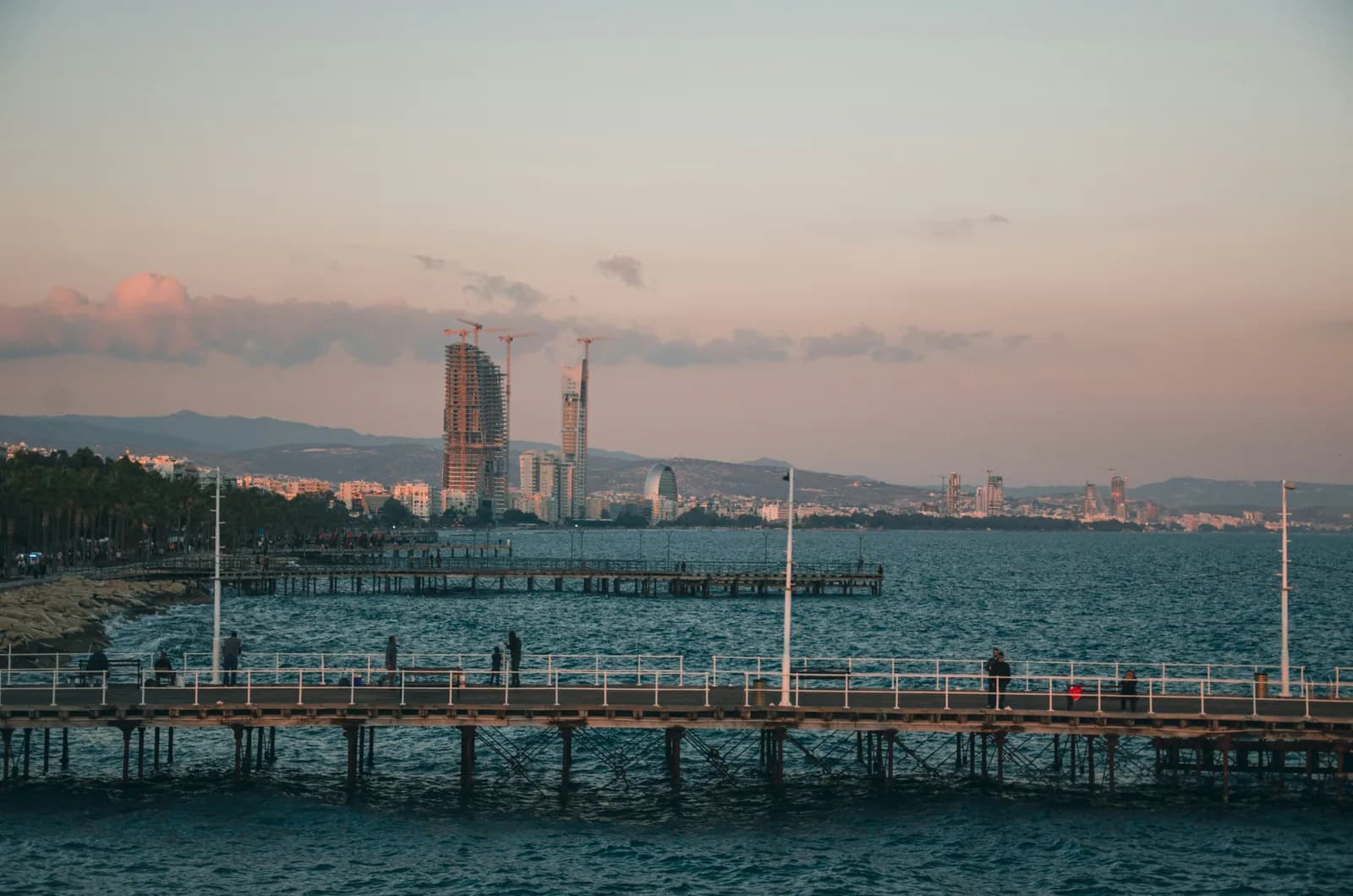
Ways to fish
Boat, shore, spearfishing, dams
Shore licence
None for rod and line
Boat trips
Dawn start, back by mid-morning
Summer
Albacore, roughly June to August
All year
Bottom fishing, when the sea allows
Bluefin
Protected: release at once
FOUR WAYS TO FISH
Fishing from Limassol, honestly
Fishing from Limassol is really four activities with four rulebooks: boat trips at sea, fishing from the shore, breath-hold spearfishing and fishing the inland reservoirs. Fishing is much the same around the coast. What changes is how far a boat runs to deep water and which protected areas apply near your harbour.
Most fishing from Limassol happens on a short, early-morning boat run offshore. Shore fishing costs almost nothing and needs no licence, but the fish close to shore are mostly small.
You do not need a licence to fish with a rod and line from the shore. To fish from a boat you take out yourself, including a hired boat, kayak or canoe, to spearfish or to fish a dam, you need a personal licence from the Department of Fisheries and Marine Research. On a fishing charter, ask the operator whether you need one of your own.
| How you fish | Where | Licence | When | Suits |
|---|---|---|---|---|
| Boat trip at sea | A short run offshore from Limassol Marina and the city's other harbours | With a crew: ask the operator whether you need your own. Your own or a hired boat, kayak or canoe: a personal vessel licence. | Bottom fishing all year when the sea allows; albacore mainly June to August; squid at night from late summer into winter | Families often fish together; ask whether a trip suits your children's ages |
| From the shore | Rocks, breakwaters and harbour walls rather than sandy beaches | None for rod and line, but the tail-fin and minimum-size rules still apply | Dawn and dusk | Anyone happy with small fish; it costs almost nothing |
| Spearfishing | Never in designated bathing areas or where the Department restricts fishing | A personal speargun licence. It is available from age 15; a young applicant also needs a guardian's written consent and must be accompanied by a licensed adult spearfisher. | Daylight only, between sunrise and sunset | Breath-hold divers only; scuba is never allowed |
| Reservoir (dam) | The banks of dams the Department has declared open; the list changes | A dam licence, from age 12; younger children on a parent's licence | One hour before sunrise to one hour after sunset | Freshwater anglers after trout, bass or carp, in sturdy shoes |
Boat trip at sea
- Where
- A short run offshore from Limassol Marina and the city's other harbours
- Licence
- With a crew: ask the operator whether you need your own. Your own or a hired boat, kayak or canoe: a personal vessel licence.
- When
- Bottom fishing all year when the sea allows; albacore mainly June to August; squid at night from late summer into winter
- Suits
- Families often fish together; ask whether a trip suits your children's ages
From the shore
- Where
- Rocks, breakwaters and harbour walls rather than sandy beaches
- Licence
- None for rod and line, but the tail-fin and minimum-size rules still apply
- When
- Dawn and dusk
- Suits
- Anyone happy with small fish; it costs almost nothing
Spearfishing
- Where
- Never in designated bathing areas or where the Department restricts fishing
- Licence
- A personal speargun licence. It is available from age 15; a young applicant also needs a guardian's written consent and must be accompanied by a licensed adult spearfisher.
- When
- Daylight only, between sunrise and sunset
- Suits
- Breath-hold divers only; scuba is never allowed
Reservoir (dam)
- Where
- The banks of dams the Department has declared open; the list changes
- Licence
- A dam licence, from age 12; younger children on a parent's licence
- When
- One hour before sunrise to one hour after sunset
- Suits
- Freshwater anglers after trout, bass or carp, in sturdy shoes
CHOOSE HOW YOU FISH
Which kind of fishing suits you?
Each card takes you to its part of this guide.
A boat trip with a crew
You want the rewarding sea fishing, a short early run offshore, with rods, tackle and bait normally supplied.
Main catch: Albacore in summer, mahi-mahi in its season, bream and reef fish all year
Read about boat trips →
Your own or a hired boat, kayak or canoe
You want to take a boat out yourself; you need a personal licence, but not your own boat.
Read the rules →
From the shore
You want a free, simple start and are happy with small fish.
Where: Rocks, breakwaters and harbour walls
Read about shore fishing →
Spearfishing
You are a confident breath-hold diver; scuba is never allowed.
When: Daylight only
Read the rules →
Reservoirs (dams)
You want freshwater fish and are ready to get a dam licence.
Fish: Trout, bass and carp, among others
Read about reservoirs →
AT SEA
Boat fishing at sea
Most boat trips leave very early, before or around dawn, and are back by mid-morning.
A typical boat trip trolls lures for open-water fish first, then often switches to bottom fishing closer to the coast. How much trolling happens depends on whether the fish are within reach that day.
Trolling for albacore, from our own trips
Trolling for albacore and other tuna-family fish is all or nothing. The boat tows lures until something takes, and we have had several trips with hours of trolling and nothing to show for it, after which the captain suggested bottom fishing instead. When the boat crosses a school, you often land several fish in a row; when it does not, you may catch none at all.
Trolling for albacore
SummerThe boat tows lures for open-water fish. Albacore, the tuna most visiting anglers catch, run mainly in early and high summer, roughly June to August, and mahi-mahi, which guides describe as an autumn visitor, are a regular catch in their season.
Bottom fishing
All yearBottom fishing for bream and other reef fish goes on all year when the sea allows, and it is often the second half of a morning trip.
Night squid trips
Late summer into winterOrganised squid fishing trips run in the evening or at night, separate from the morning outing. The season runs from late summer into winter.
'Deep-sea' trips
Bigger fish; marlin unlikelyCyprus is not a big-game destination in the ocean sense, but we have seen photographs of large fish caught from Cypriot boats. A fishing guide to Cyprus lists amberjack and grouper among the targets of deep-sea trips, alongside albacore and mahi-mahi, and guides describe common dentex as present much of the year. Many trips sold as deep-sea fishing are bottom fishing for bream and snapper a little way offshore. Marlin-type billfish are uncommon this far east, so be wary of any trip that promises marlin.
Private charter or shared boat
Ask before you bookSome boats are chartered privately with a rod for each angler; others take mixed groups and share rods. Ask how many people and how many rods will be on board.
Two albacore, showing their long pectoral fins Mahi-mahi piled on the deck A small squid on the line, lifted from a flat calm sea A tray of freshly caught squid on board A mixed catch in the cool box: bream, mackerel and two tuna-family fish
Whether you can keep your catch, or have it prepared for you, depends on the boat. Ask before you book.
Boat trips normally supply rods, tackle and bait; if you want to use your own, ask first.
“The skipper makes the trip. Good captains teach beginners, explain what is happening and are honest about the chances on the day.”
ON YOUR OWN
Your own or a hired boat, kayak or canoe
Fishing from any boat you take out yourself, whether hired, borrowed or a kayak or canoe, needs the Department's personal licence for fishing with a vessel. You do not need to own the boat.
The Department's licence form lists a canoe or kayak as a vessel to declare, so a kayak counts as a boat for this licence.
On a private or hired boat, every adult who fishes needs a licence; a passenger who only watches does not. Children under 17 may fish with a small rod without one.
Fishing is restricted in parts of Cyprus's marine protected areas. The Department's CyFis app shows on a map the areas where fishing or passage is restricted.
Catches are limited per trip: from a boat and with a speargun by weight, with a separate allowance for albacore tuna. Fish caught for fun may not be sold.
FROM THE SHORE
Fishing from the shore
Shore fishing costs almost nothing and needs no licence, but keep your expectations modest: close to shore the water is very clear and the fish are mostly small. Visiting anglers who have written about it say so, and so does our own experience: when one of our own family tried shore fishing here, it was all small fish.
From the shore, rocks, breakwaters and harbour walls fish better than sandy beaches.
In Limassol, a Cypriot guide names the Old Port and marina area, the piers along the Molos promenade and the fishing shelter at Akrotiri, which lies inside the Sovereign Base Area. Access to piers and harbour walls can change.
Local shore anglers use light rods or long poles, small hooks and natural bait such as bread paste, worms or strips of squid, fishing at dawn and dusk. Simple tackle and bait are sold in Cyprus.
No licence, but the rules still apply
You do not need a licence to fish with a rod and line from the shore. If you keep a fish you caught for fun, cut off the upper half of its tail fin; the rule applies from the shore as well as from a boat. Cyprus sets minimum sizes, and an undersized fish must go back. Fish caught for fun may not be sold, and protected-area rules still apply.
Some fish you may catch have venomous spines; see Safety and weather below before you handle your catch.
UNDERWATER
Spearfishing
- Spearfishing in Cyprus is breath-hold only. Using a speargun together with scuba or any other underwater breathing apparatus is a criminal offence.
- Spearfishing is allowed only between sunrise and sunset, never with a light or breathing apparatus, and never in designated bathing areas. A speargun may not be carried on a boat at night.
- You need a personal speargun licence from the Department. Spearfishing licences are available from age 15, with written consent from a parent or guardian and only while accompanied by a licensed adult spearfisher.
- Speargun catches are limited by weight per trip, and fish caught for fun may not be sold.
- Fishing is restricted in parts of the marine protected areas, and the Department's CyFis app shows on a map the areas where fishing or passage is restricted.
- Fisheries inspectors patrol harbours, beaches, dams and the sea, and fines for breaking the rules are substantial.
INLAND
Reservoir (dam) fishing
From Limassol, as elsewhere in the Republic of Cyprus, reservoir fishing is allowed only from the banks of dams the Department has declared open, and the list changes. Check it when you apply for your licence; that is why we do not print a list.
The reservoirs hold freshwater fish such as trout, bass, carp, zander, pike and eel. Some must go back alive, pike must not be returned, and eels may not be fished; read the conditions that come with your licence.
Dam licences are issued from age 12, with parental consent until 18. Younger children may fish only on a parent's licence, close beside the parent and wearing a lifejacket. Some species must be released alive.
At the dams, fishing is allowed from one hour before sunrise until one hour after sunset, so a winter fishing day is much shorter than a summer one.
Dam banks are steep and loose underfoot. Wear shoes with good grip, cover your legs and watch where you step, because vipers live around the reservoirs.
AROUND LIMASSOL
Fishing around Limassol
Fishing is much the same around the coast. What changes is how far a boat runs to deep water and which protected areas apply near your harbour.
Fishing boats leave from marinas and small harbours all around the coast. In Limassol, the official list of harbours includes Limassol Marina and the Old Port, and St Raphael Marina, east of the city, is another departure point.
Since 1979 the Old Port has been kept for fishing boats and leisure craft, after the new commercial port took over its trade.
West of the city, the coast around Akrotiri belongs to the British Sovereign Base Areas, which have their own fishing regulations. They refer to Republic of Cyprus licences, but some rules differ, so ask your captain if you will be fishing there. The small fishing harbour at Akrotiri lies inside the Sovereign Base Area.
Fishing is restricted in parts of Cyprus's marine protected areas, including Cape Greco, the Lara and Toxeftra coast of Akamas and several artificial reefs. Ask your captain which rules apply where you are going.
This loads Google Maps, switches on functional cookies and lets Google set its own cookies. You can change this in the cookie settings at any time.
Boats leave from Limassol Marina, the Old Port and St Raphael Marina.
Local knowledge, from our own trips
Off Limassol, fishing boats work the water around the ships lying at anchor outside the port. Tour boats and local anglers fish there regularly, and we have fished there ourselves.
WHEN TO GO
Fishing from Limassol through the year
The evidence supports broad seasons rather than month-by-month detail, so each row shows a season, not a forecast. The sea warms from about 16 to 17°C in late winter to about 27°C in August.
J
F
M
A
M
J
J
A
S
O
N
D
Bottom fishing
Albacore
Within the broad season Outside it
Right now, in September
Night squid and bottom fishing. Guides to fishing in Cyprus describe mahi-mahi (dolphinfish) as an autumn visitor, from around September. Many anglers we know have caught mahi-mahi here, so in its season it is a regular catch, not a long shot. Night squid fishing runs from late summer into winter, and bottom fishing goes on when the sea allows.
THE CATCH
What you might catch
Albacore tuna
μακρύπτερος τόνος (makripteros tonos)
Season: Roughly June to August
Where: Open water, trolled for from a boat
Mahi-mahi (dolphinfish)
Season: Autumn, say fishing guides; ask your captain
Where: Open water, trolled for from a boat
Amberjack
μαγιάτικο (mayatiko)
Season: Not pinned to a season; ask your captain
Where: Deeper water, on deep-sea trips
Grouper
Season: Not pinned to a season; ask your captain
Where: Deeper water, on deep-sea trips
Common dentex
συναγρίδα (sinagrida)
Season: Much of the year
Where: Near the bottom
Bream and other reef fish
Season: All year when the sea allows
Where: The bottom, on bottom-fishing trips
Flying squid
θράψαλο (thrapsalo)
Season: Late summer into winter
Where: On evening or night squid trips
Common squid
καλαμάρι (kalamari)
Season: Late summer into winter
Where: On evening or night squid trips
Atlantic bluefin tuna are protected. Recreational anglers in Cyprus may not keep them, and any bluefin hooked by accident must be released straight away.
Swordfish are off-limits to recreational anglers all year.
Summer trips target albacore and smaller tuna-family fish.
Guides to fishing in Cyprus describe mahi-mahi (dolphinfish) as an autumn visitor, from around September. Many anglers we know have caught mahi-mahi here, so in its season it is a regular catch, not a long shot.
LOCAL NAMES
Names you may hear on the boat
Captains may use Greek names: albacore is μακρύπτερος τόνος (makripteros tonos), amberjack is μαγιάτικο (mayatiko), common dentex is συναγρίδα (sinagrida) and a flying squid is θράψαλο (thrapsalo), a larger animal than the common squid, καλαμάρι (kalamari).
| English | Local name (how to say it) | Do not confuse with |
|---|---|---|
| Albacore tuna | μακρύπτερος τόνος (makripteros tonos) | Atlantic bluefin tuna, which is protected and must be released |
| Atlantic bluefin tuna | ερυθρός τόνος (erithros tonos) | Albacore; young bluefin swim with little tunny |
| Little tunny | παλαμίδα (palamida) | Young bluefin, which swim with it; elsewhere the word often means Atlantic bonito |
| Mahi-mahi (dolphinfish) | λαμπούκα (lambouka), a name used in Greek and not confirmed as the usual Cypriot word | Dolphins, which are mammals |
| Flying squid | θράψαλο (thrapsalo) | Common squid, καλαμάρι (kalamari), a smaller, different species |
| Amberjack | μαγιάτικο (mayatiko) | Other jacks |
| Common dentex | συναγρίδα (sinagrida) | Other sea breams |
| Silver-cheeked toadfish | λαγοκέφαλος (lagokefalos) | Harmless reef fish; this one is poisonous to eat |
| Lionfish | λεοντόψαρο (leontopsaro) | Scorpionfish, σκορπιός (skorpios) |
| Scorpionfish | σκορπιός (skorpios) | Lionfish and harmless rockfish |
| Weever | δράκαινα (drakena) | Harmless sand-dwelling fish |
Albacore tuna
- Local name (how to say it)
- μακρύπτερος τόνος (makripteros tonos)
- Do not confuse with
- Atlantic bluefin tuna, which is protected and must be released
Atlantic bluefin tuna
- Local name (how to say it)
- ερυθρός τόνος (erithros tonos)
- Do not confuse with
- Albacore; young bluefin swim with little tunny
Little tunny
- Local name (how to say it)
- παλαμίδα (palamida)
- Do not confuse with
- Young bluefin, which swim with it; elsewhere the word often means Atlantic bonito
Mahi-mahi (dolphinfish)
- Local name (how to say it)
- λαμπούκα (lambouka), a name used in Greek and not confirmed as the usual Cypriot word
- Do not confuse with
- Dolphins, which are mammals
Flying squid
- Local name (how to say it)
- θράψαλο (thrapsalo)
- Do not confuse with
- Common squid, καλαμάρι (kalamari), a smaller, different species
Amberjack
- Local name (how to say it)
- μαγιάτικο (mayatiko)
- Do not confuse with
- Other jacks
Common dentex
- Local name (how to say it)
- συναγρίδα (sinagrida)
- Do not confuse with
- Other sea breams
Silver-cheeked toadfish
- Local name (how to say it)
- λαγοκέφαλος (lagokefalos)
- Do not confuse with
- Harmless reef fish; this one is poisonous to eat
Lionfish
- Local name (how to say it)
- λεοντόψαρο (leontopsaro)
- Do not confuse with
- Scorpionfish, σκορπιός (skorpios)
Scorpionfish
- Local name (how to say it)
- σκορπιός (skorpios)
- Do not confuse with
- Lionfish and harmless rockfish
Weever
- Local name (how to say it)
- δράκαινα (drakena)
- Do not confuse with
- Harmless sand-dwelling fish
RULES AND LICENCES
Rules and licences in one place
These rules are the same from Limassol as elsewhere in the Republic of Cyprus; the Sovereign Base Areas at Akrotiri and Dhekelia have their own regulations.
| How you fish | Licence | Who needs one | Keep in mind |
|---|---|---|---|
| Rod and line from the shore | None | Nobody | The tail-fin and minimum-size rules still apply |
| A fishing charter with a crew | Ask the operator | Not settled for every case | Ask whether the boat holds the Department's permit for fishing as a tourist activity, and whether you need your own licence |
| Your own, hired or borrowed boat, kayak or canoe | Personal vessel licence | Every adult who fishes; not a passenger who only watches; children under 17 may fish with a small rod without one | You do not need to own the boat |
| Spearfishing | Speargun licence | Anyone who spearfishes | Available from age 15; a young applicant also needs a guardian's written consent and must be accompanied by a licensed adult spearfisher. Breath-hold and daylight only. |
| Reservoir (dam) | Dam licence | From age 12, with parental consent until 18; younger children on a parent's licence | Declared-open dams only, from the bank |
Rod and line from the shore
- Licence
- None
- Who needs one
- Nobody
- Keep in mind
- The tail-fin and minimum-size rules still apply
A fishing charter with a crew
- Licence
- Ask the operator
- Who needs one
- Not settled for every case
- Keep in mind
- Ask whether the boat holds the Department's permit for fishing as a tourist activity, and whether you need your own licence
Your own, hired or borrowed boat, kayak or canoe
- Licence
- Personal vessel licence
- Who needs one
- Every adult who fishes; not a passenger who only watches; children under 17 may fish with a small rod without one
- Keep in mind
- You do not need to own the boat
Spearfishing
- Licence
- Speargun licence
- Who needs one
- Anyone who spearfishes
- Keep in mind
- Available from age 15; a young applicant also needs a guardian's written consent and must be accompanied by a licensed adult spearfisher. Breath-hold and daylight only.
Reservoir (dam)
- Licence
- Dam licence
- Who needs one
- From age 12, with parental consent until 18; younger children on a parent's licence
- Keep in mind
- Declared-open dams only, from the bank
Visitors can apply online with a passport number. The Department examines applications within two working days, and licences run to 31 December of the year they are issued. The payment receipt is your licence: print it and carry it while you fish.
- Catches are limited per trip: from a boat and with a speargun by weight, with a separate allowance for albacore tuna. Fish caught for fun may not be sold.
- If you keep a fish you caught for fun, cut off the upper half of its tail fin. The rule applies to all recreational catch in Cyprus, from the shore as well as from a boat.
- Cyprus sets minimum sizes, and an undersized fish must go back. Ask your captain, or the Department, which sizes apply to what you catch.
- EU rules now require anglers who target certain protected species to report their catches through an app. Ask the Department or your captain whether this applies to what you plan to catch.
- Atlantic bluefin tuna are protected. Recreational anglers in Cyprus may not keep them, and any bluefin hooked by accident must be released straight away.
- Swordfish are off-limits to recreational anglers all year.
- The Department's CyFis app shows on a map the areas where fishing or passage is restricted.
- Fisheries inspectors patrol harbours, beaches, dams and the sea, and fines for breaking the rules are substantial.
SAFETY
Safety and weather
Whether a boat sails is the captain's decision. As of September 2026, no law allows the authorities to stop a boat from setting out. Ask how the decision is made and what happens to your booking if the trip is called off.
In summer the wind usually builds through the day, so mornings are often calmer. That is a tendency, not a promise.
Bring strong sun protection and clothes that cover you, because the sun on the water is intense even when it is not hot. If you are prone to seasickness, take your remedy before you board.
Some fish you may catch, such as lionfish, scorpionfish and weever, have venomous spines. If you are not sure what you have caught, do not handle it with bare hands, and if a spine goes into your skin, get medical help.
The silver-cheeked toadfish, an invasive pufferfish now common in Cypriot catches, contains a potent natural toxin and must never be eaten. Handle it with care; on a boat, let the crew deal with it.
Sea turtles and Mediterranean monk seals live in Cypriot waters and are protected.
LOCAL LIFE
Fishing in Cypriot life
- Most of Cyprus's professional fishing boats are small coastal vessels under twelve metres, and the people who work them are, on average, getting older.
- A fishing harbour does not always mean a working fishing village: in many places where fishing communities once lived, only the shelter remains.
- The division of the island in 1974 cost Cypriot fishers about two fifths of their fishing grounds, and Ayia Napa changed from a fishing village into a resort.
- Most of the local catch reaches diners through middlemen, and much of it ends up in seaside fish taverns.
- Fish has a place in the church calendar: Cypriots traditionally eat it on the Annunciation and on Palm Sunday, when Lent permits it.
- Lionfish have spread in Cypriot waters since 2012, and an EU-funded project brought them onto fish counters and restaurant menus from 2019 to encourage their removal.
BEFORE YOU BOOK
Before you book
- Is the boat private or shared, and how many rods will there be?
- Which fish are you realistically targeting this month?
- Can you keep or cook your catch?
- Does the boat hold the Department's permit for fishing as a tourist activity, and do you need your own licence?
- What happens if the weather turns?
- What language does the crew speak?
Families often fish together, but landing an albacore tuna can be hard work. Ask whether the trip suits your children's ages; bottom fishing and shore fishing are gentler starts.
This guide gives no price figures, because prices vary from boat to boat and change often. A private charter is usually priced per boat for a set number of people, and a shared boat per person. Check how many people and rods are included, what is supplied, and whether you may keep the catch.
- A boat trip with a crew: the rewarding way to fish at sea; bottom fishing is the gentler start for children.
- Your own or a hired boat, kayak or canoe: for anglers who hold, or will apply for, the personal vessel licence.
- The shore: costs almost nothing, and suits anyone happy with small fish.
- Spearfishing: breath-hold divers with a speargun licence only.
- Reservoirs: freshwater anglers with a dam licence and sturdy shoes.
CURRENT TRIPS
The 4 fishing trips listed in Limassol
These are the fishing trips currently listed here, which is a smaller set than the ways to fish described above. If the format you want is not listed, the guide above still tells you what to look for elsewhere.
Trips are ordered by our recommendation. Ranking is never paid placement.
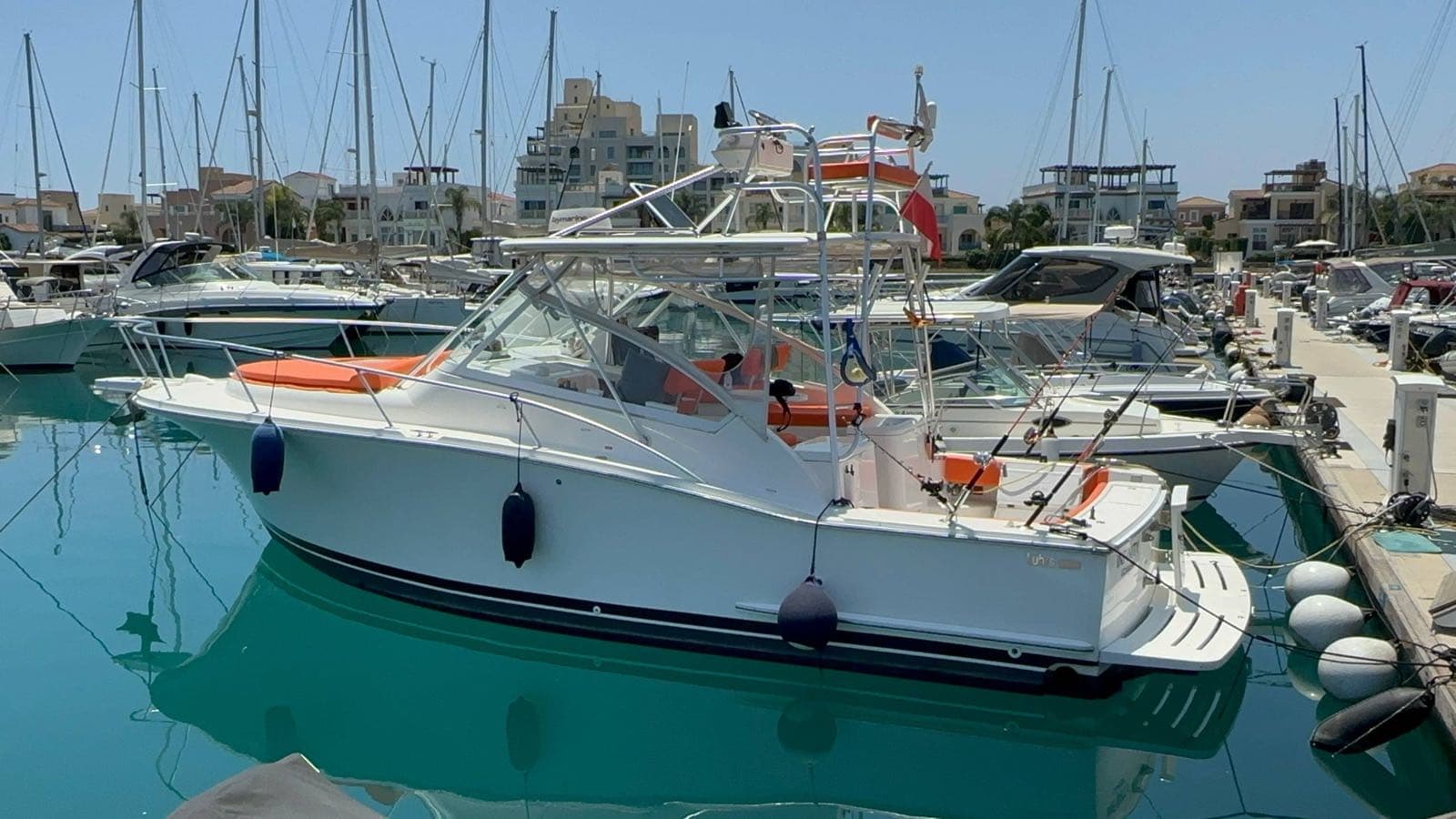
Limassol, Cyprus
Private Fishing Trip from Limassol Marina on a Luhrs (up to 7 Guests)
A private fishing trip from Limassol Marina on the Luhrs, a boat that suits up to seven guests and is most comfortable with six. Captains with ten to twenty years on these waters provide trolling lures and spinning rods, with drinks included on board.
Small group · max 10
Free cancellation up to 24h before
6h
Private Charter · From €1500
View Activity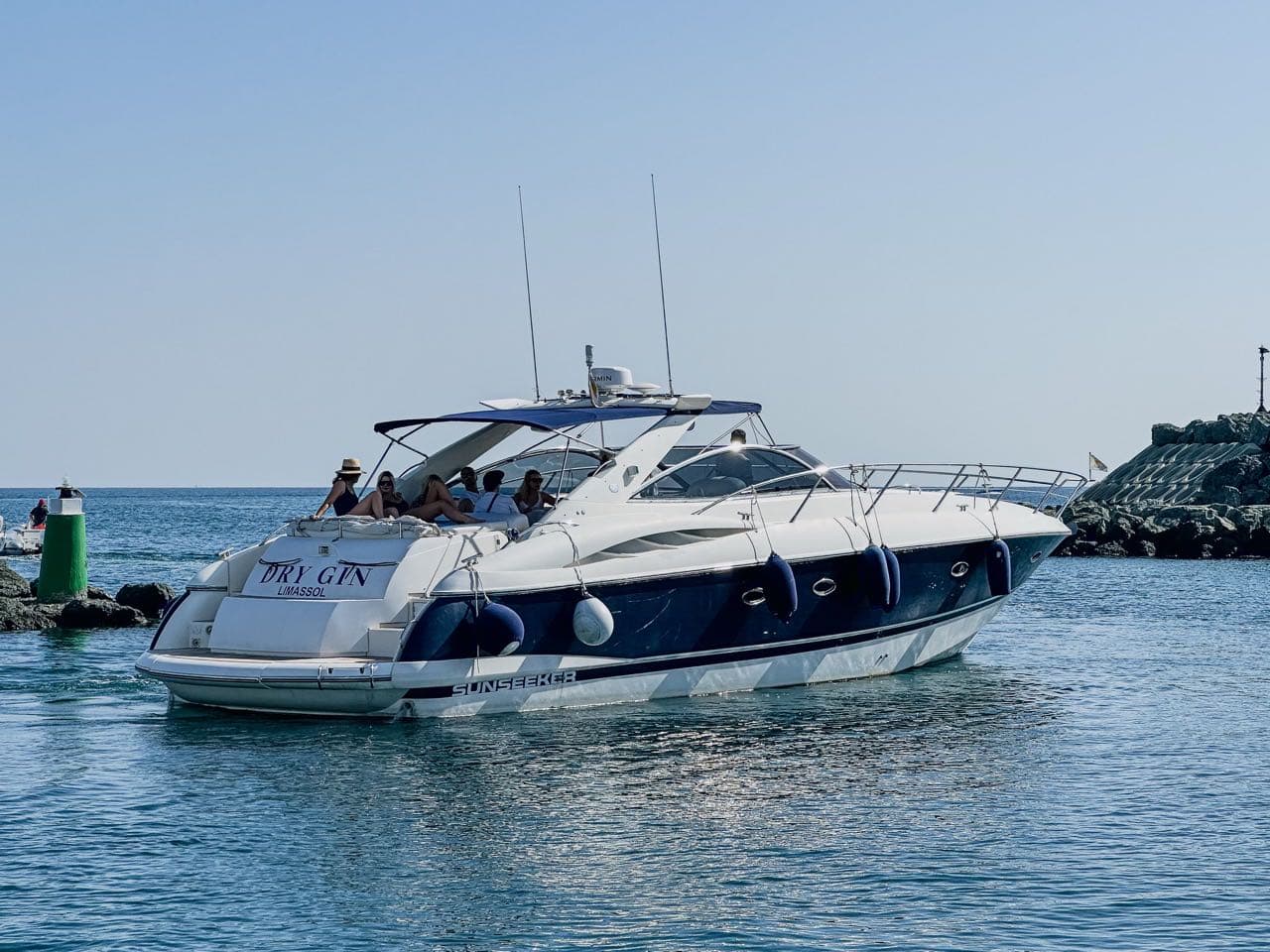
Limassol, Cyprus
Private Fishing Trip from St Raphael Marina on a Sunseeker 50 (up to 10 Guests)
A private fishing trip from St Raphael Marina on the Sunseeker 50, a boat that suits up to ten guests and is most comfortable with eight. Captains with ten to twenty years on these waters provide trolling lures and spinning rods, with drinks included on board.
Small group · max 10
Free cancellation up to 24h before
6h
Private Charter · From €2000
View Activity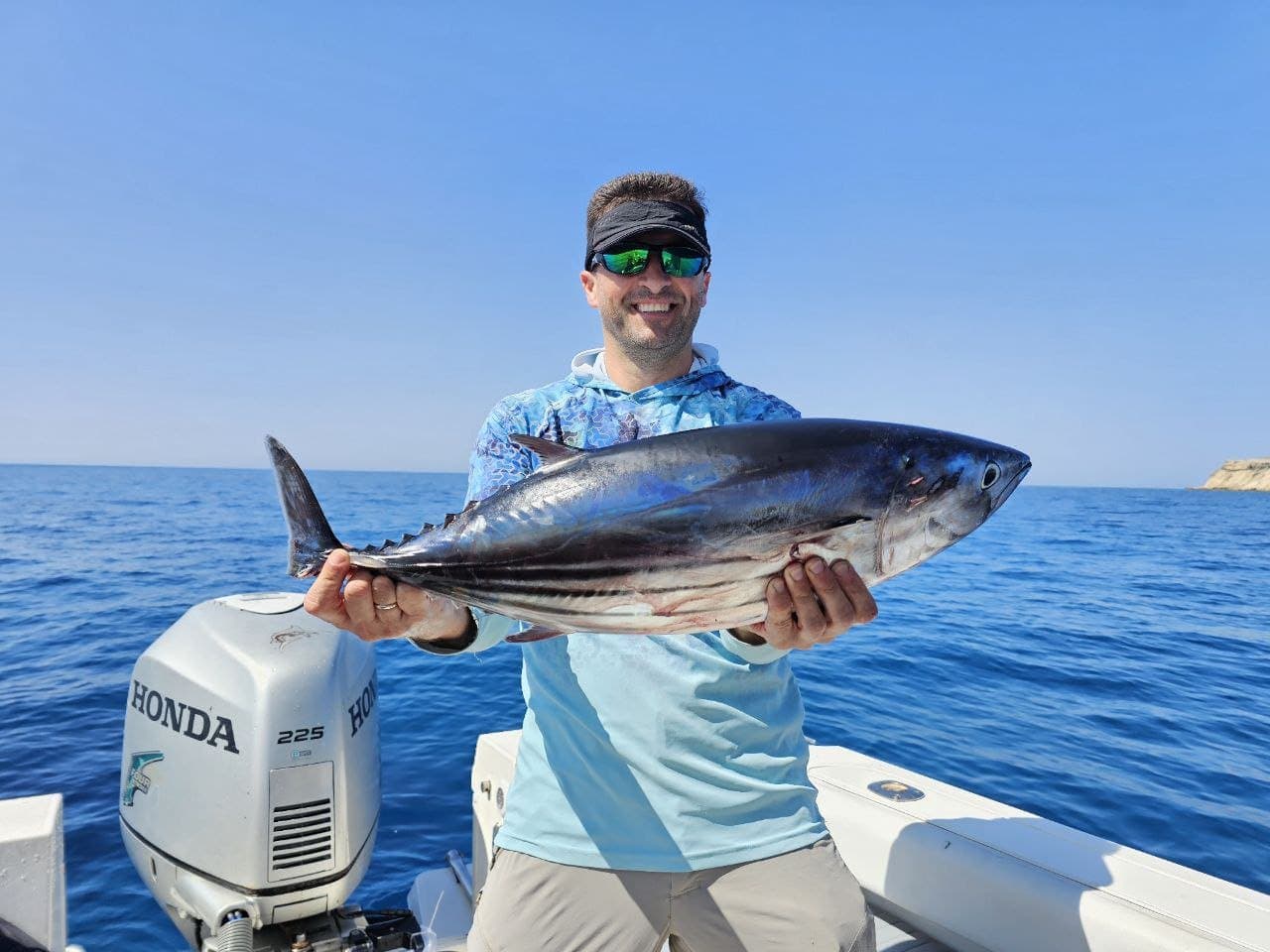
Limassol, Cyprus
Private Fishing Trip from Limassol Marina on a Saver 330 (up to 7 Guests)
A private fishing trip from Limassol Marina on the Saver 330, a boat that suits up to seven guests and is most comfortable with six. Trolling lures and spinning rods are provided, with drinks included on board.
Small group · max 10
Free cancellation up to 24h before
6h
Private Charter · From €1300
View Activity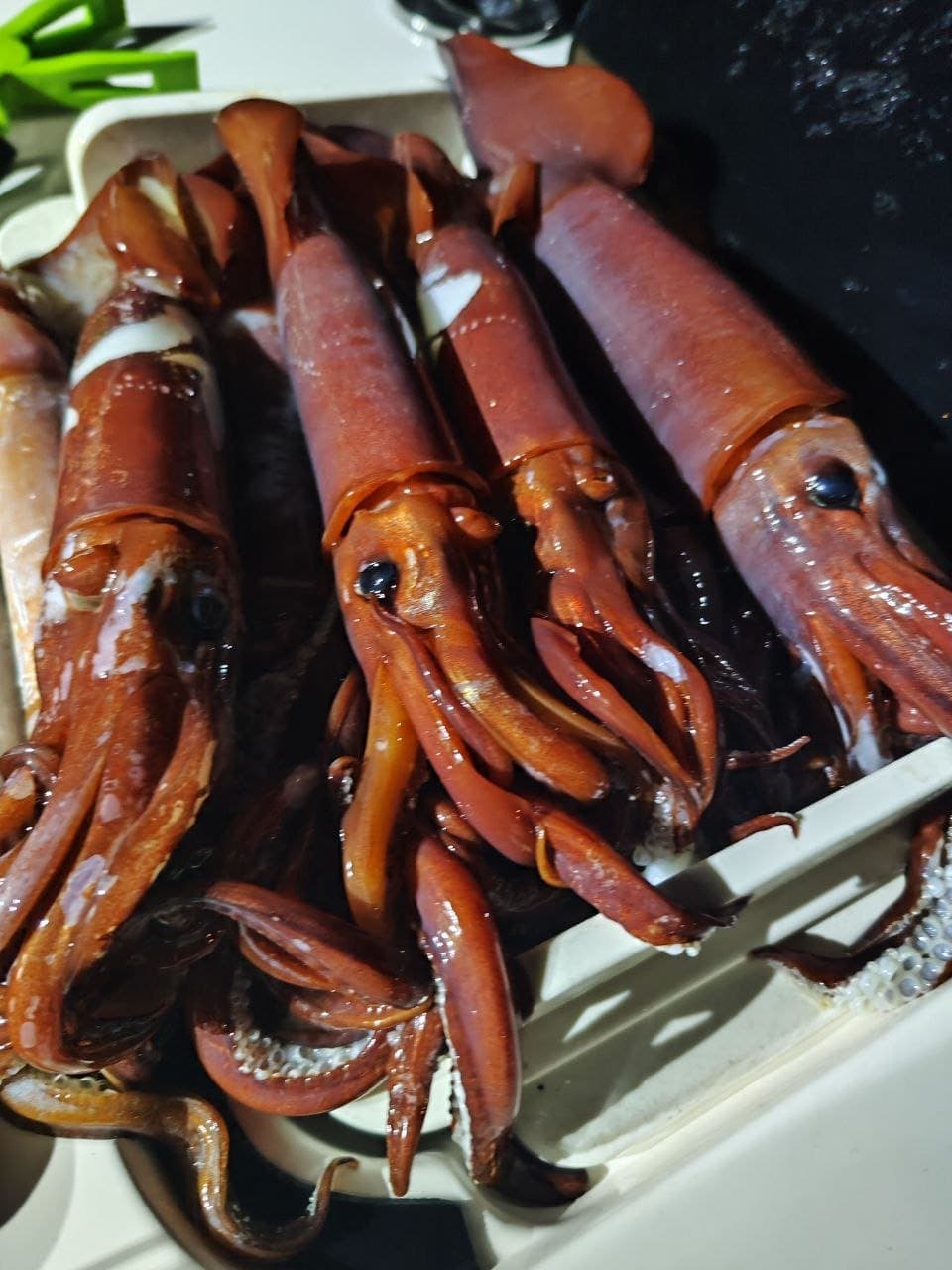
Limassol, Cyprus
Private Fishing Trip from Limassol Marina on a Karnic 23 (up to 5 Guests)
A private fishing trip from Limassol Marina on the Karnic 23, a boat that suits up to five guests and is most comfortable with three. Captains with ten to twenty years on these waters provide trolling lures and spinning rods, with drinks included on board.
Small group · max 10
Free cancellation up to 24h before
6h
Private Charter · From €700
View ActivityQUESTIONS
Frequently asked questions
Do I need a fishing licence in Limassol?
You do not need a licence to fish with a rod and line from the shore. To fish from a boat you take out yourself, including a hired boat, kayak or canoe, to spearfish or to fish a dam, you need a personal licence from the Department of Fisheries and Marine Research. You do not need to own the boat. On a fishing charter, ask the operator whether you need one of your own.
Can a visitor get a licence, and how long does it take?
Visitors can apply online with a passport number. The Department examines applications within two working days, and licences run to 31 December of the year they are issued. The payment receipt is your licence: print it and carry it while you fish.
Do I need my own licence on a fishing charter?
The rules do not settle every case, so ask the operator whether the boat holds the Department's permit for recreational fishing as a tourist activity, and whether you need a licence of your own.
Can I fish from a kayak or a hired boat?
Fishing from any boat you take out yourself, whether hired, borrowed or a kayak or canoe, needs the Department's personal licence for fishing with a vessel. You do not need to own the boat. On a private or hired boat, every adult who fishes needs a licence; a passenger who only watches does not. Children under 17 may fish with a small rod without one.
Can I just fish from the beach or the harbour, and is it worth it?
Shore fishing costs almost nothing and needs no licence, but keep your expectations modest: close to shore the water is very clear and the fish are mostly small. Visiting anglers who have written about it say so, and so does our own experience: when one of our own family tried shore fishing here, it was all small fish. From the shore, rocks, breakwaters and harbour walls fish better than sandy beaches. Local shore anglers use light rods or long poles, small hooks and natural bait such as bread paste, worms or strips of squid, fishing at dawn and dusk.
Can I keep what I catch, and is there a minimum size?
If you keep a fish you caught for fun, cut off the upper half of its tail fin. The rule applies to all recreational catch in Cyprus, from the shore as well as from a boat. Cyprus sets minimum sizes, and an undersized fish must go back. Ask your captain, or the Department, which sizes apply to what you catch. Fish caught for fun may not be sold. On a boat, whether you can keep your catch depends on the boat, so ask before you book.
Do I have to report my catch?
EU rules now require anglers who target certain protected species to report their catches through an app. Ask the Department or your captain whether this applies to what you plan to catch.
What can I catch from Limassol, and when is the albacore season?
Albacore, the tuna most visiting anglers catch, run mainly in early and high summer, roughly June to August, with the best weeks usually in June and July. Bottom fishing for bream and other reef fish goes on all year when the sea allows. Night fishing for squid runs from late summer into winter; the best weeks vary by year and by species. Guides to fishing in Cyprus describe mahi-mahi (dolphinfish) as an autumn visitor, from around September. Many anglers we know have caught mahi-mahi here, so in its season it is a regular catch, not a long shot.
Can I catch marlin or sharks off Limassol?
Cyprus is not a big-game destination in the ocean sense. Trips sold as deep-sea fishing usually mean bottom fishing for bream and snapper a little way offshore, and marlin-type billfish are uncommon this far east, so be wary of any trip that promises marlin. In the Sovereign Base Areas, including the Akrotiri coast west of Limassol, sharks may not be targeted or kept by recreational anglers.
Can I keep a bluefin tuna if I catch one?
Atlantic bluefin tuna are protected. Recreational anglers in Cyprus may not keep them, and any bluefin hooked by accident must be released straight away.
Is fishing from Limassol different from Paphos, Larnaca or Ayia Napa?
Fishing is much the same around the coast. What changes is how far a boat runs to deep water and which protected areas apply near your harbour. Fishing boats leave from marinas and small harbours all around the coast. West of Limassol, the Akrotiri coast is a British Sovereign Base Area with its own fishing regulations.
What happens on a typical fishing trip, and how early does it start?
Most boat trips leave very early, before or around dawn, and are back by mid-morning. A typical boat trip trolls lures for open-water fish first, then often switches to bottom fishing closer to the coast. How much trolling happens depends on whether the fish are within reach that day.
What is a night squid trip?
Organised squid fishing trips run in the evening or at night, separate from the morning outing. Night fishing for squid runs from late summer into winter; the best weeks vary by year and by species. A flying squid, θράψαλο (thrapsalo), is a larger animal than the common squid, καλαμάρι (kalamari).
Private charter or shared boat: what is the difference?
Some boats are chartered privately with a rod for each angler; others take mixed groups and share rods. Ask how many people and how many rods will be on board.
How much does a fishing trip cost?
This guide gives no price figures, because prices vary from boat to boat and change often. A private charter is usually priced per boat for a set number of people, and a shared boat per person. Check how many people and rods are included, what is supplied, and whether you may keep the catch.
Can I bring my own rod, and where do I buy bait and tackle?
Boat trips normally supply rods, tackle and bait; if you want to use your own, ask first. For shore fishing, simple tackle and bait are sold in Cyprus.
Is a fishing trip suitable for children?
Families often fish together, but landing an albacore tuna can be hard work. Ask whether the trip suits your children's ages; bottom fishing and shore fishing are gentler starts. On a private or hired boat, children under 17 may fish with a small rod without a licence. At the dams, where licences start at age 12, younger children may fish only on a parent's licence, close beside the parent and wearing a lifejacket.
What should I bring, and will I get seasick?
Bring strong sun protection and clothes that cover you, because the sun on the water is intense even when it is not hot. If you are prone to seasickness, take your remedy before you board.
Which fish are dangerous to handle?
Some fish you may catch, such as lionfish, scorpionfish and weever, have venomous spines. If you are not sure what you have caught, do not handle it with bare hands, and if a spine goes into your skin, get medical help. The silver-cheeked toadfish, an invasive pufferfish now common in Cypriot catches, contains a potent natural toxin and must never be eaten. Handle it with care; on a boat, let the crew deal with it.
What happens if the weather is bad?
Whether a boat sails is the captain's decision. As of September 2026, no law allows the authorities to stop a boat from setting out. Ask how the decision is made and what happens to your booking if the trip is called off. In summer the wind usually builds through the day, so mornings are often calmer. That is a tendency, not a promise.
Can I go spearfishing, and can I use scuba or spearfish at night?
Spearfishing in Cyprus is breath-hold only. Using a speargun together with scuba or any other underwater breathing apparatus is a criminal offence. Spearfishing is allowed only between sunrise and sunset, never with a light or breathing apparatus, and never in designated bathing areas. A speargun may not be carried on a boat at night. Spearfishing licences are available from age 15, with written consent from a parent or guardian and only while accompanied by a licensed adult spearfisher.
Can I fish the reservoirs, and what lives in them?
Reservoir fishing is allowed only from the banks of dams the Department of Fisheries and Marine Research has declared open, and the list changes. Check it when you apply for your licence. The reservoirs hold freshwater fish such as trout, bass, carp, zander, pike and eel. Some must go back alive, pike must not be returned, and eels may not be fished; read the conditions that come with your licence. At the dams, fishing is allowed from one hour before sunrise until one hour after sunset, so a winter fishing day is much shorter than a summer one.
Where is fishing not allowed?
Fishing is restricted in parts of Cyprus's marine protected areas, including Cape Greco, the Lara and Toxeftra coast of Akamas and several artificial reefs. At Cape Greco the protected area is zoned: one zone is closed to all fishing, a second is closed to recreational fishing, and an outer zone is open to all. Spearfishing is never allowed in designated bathing areas. The Department's CyFis app shows restricted areas on a map, and the Sovereign Base Areas at Akrotiri and Dhekelia have their own regulations.
What are the fish called in Greek?
Captains may use Greek names: albacore is μακρύπτερος τόνος (makripteros tonos), amberjack is μαγιάτικο (mayatiko), common dentex is συναγρίδα (sinagrida) and a flying squid is θράψαλο (thrapsalo), a larger animal than the common squid, καλαμάρι (kalamari).
Sources and review date
The rules on this page come from the Department of Fisheries and Marine Research, the Fisheries Law and Regulations, the Sovereign Base Areas Administration and the European Union's catch-reporting rules; the practical advice also draws on published guides and anglers' own reports.
Sources checked on 24 September 2026. Traveller reviews, operator pages, booking platforms and retailers were also read; we do not name or link them.
Photos: three are our own, taken on fishing trips off Limassol; the other five come from the photo galleries of local fishing trips.
- gov.cy: Apply and pay for a recreational fishing licence
- DFMR amateur fishing licence application portal
- Fisheries (Amendment) Regulations 2019, K.D.P. 416/2019 (CyLaw)
- Fisheries Law Cap. 135, consolidated (CyLaw)
- DFMR: Marine Protected Areas Network
- gov.cy: Electronic recording and reporting of amateur fisheries data (CyFis)
- SBA Administration: Fisheries Regulations 2012, consolidated to 23 December 2020
- European Commission: Questions and answers on RecFishing (2026)
- Angling International: EU releases catch-reporting RecFishing app (2026)
- European Commission: National Fisheries Profile of Cyprus (2025)
- SPA/RAC (UNEP/MAP): Cape Greco MPA habitat mapping (2021)
- CFAA: Conditions for recreational fishing licences in reservoirs, 2026
- Visit Cyprus: Marinas and fishing harbors
- Visit Cyprus: Climate and weather
- DFMR and PIO: The Fishing Shelters of Cyprus (2017)
- Boat & Fishing: DFMR clarification of the 2019 Regulations (2020)
- Boat & Fishing: philenews interview with the DFMR Director (2020)
- Boat & Fishing: DFMR notice on tuna species and bluefin (2022)
- Boat & Fishing: swordfish (2022)
- Dialogos: stricter fisheries controls (2025)
- Cyprus Fishing Magazine: boat fishing basics
- Cyprus Fishing Magazine: flying squid
- CyprusAlive: albacore in Cyprus
- CyprusAlive: Limassol Old Port
- Ypaithros: dentex
- Cyprus Forum: fishing thread (2007)
- World Sea Fishing: Seafishing in Cyprus, Paphos (2007 to 2013)
- World Sea Fishing: has anybody ever tried fishing cyprus (2014)
- FlyFishing.co.uk: Cyprus
- FlyFishing.co.uk: Paphos harbour
- Predator Fishing World: dam reservoirs (2024)
- DOM LiVE: Fishing in Cyprus
- WWF: Mediterranean species guide
- Reporter: poisonous fish (2016)
- National Capital Poison Center: How to treat a lionfish sting
- Frontiers in Marine Science (2024)
- Cyprus Food Museum: Fishing and fish dishes
- Pandoteira: marine protected areas of Cyprus
- MarinaTips: St Raphael Marina
- Climate of Cyprus (Wikipedia)
Guide last updated on