
Protaras boat trips
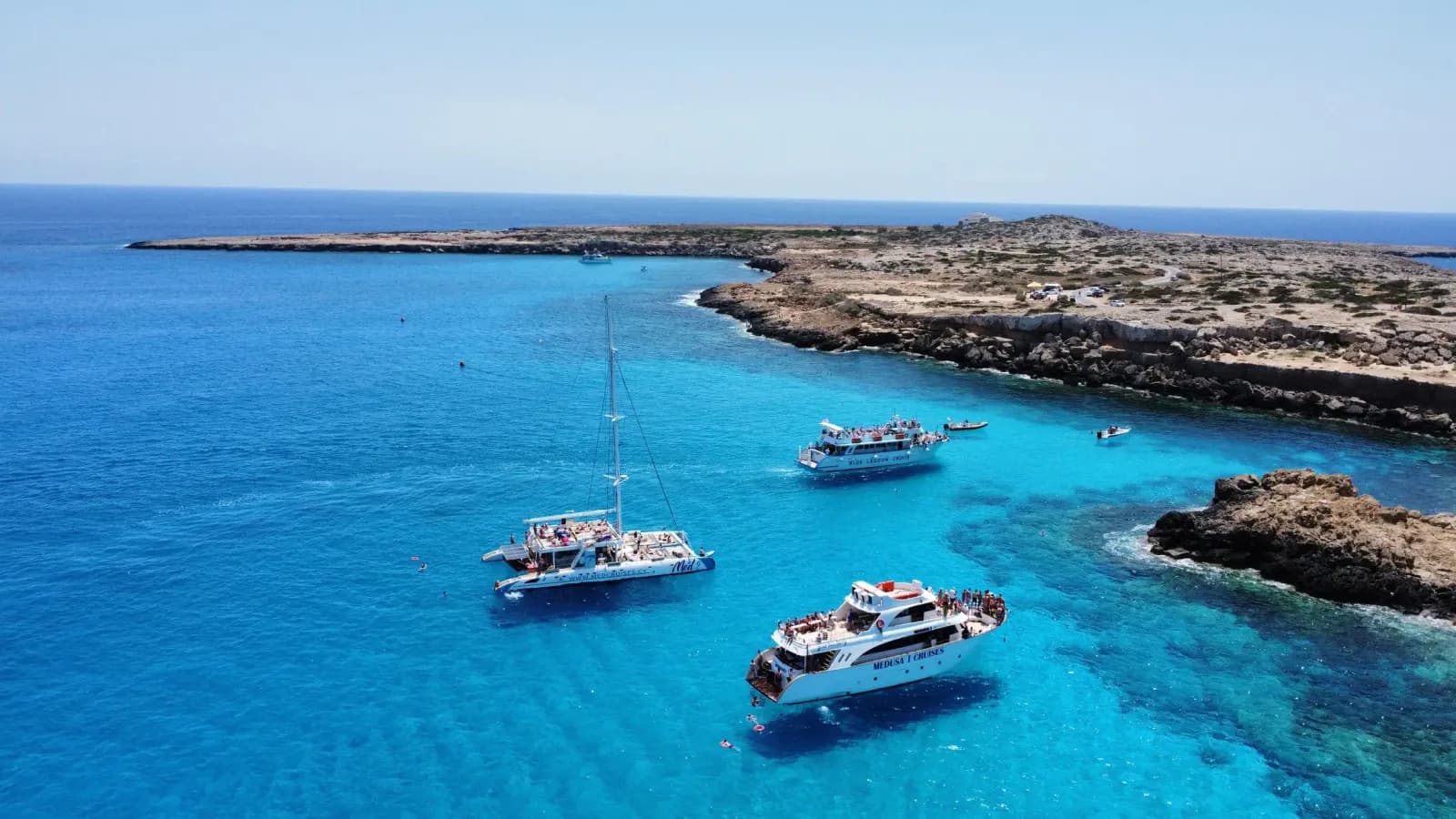
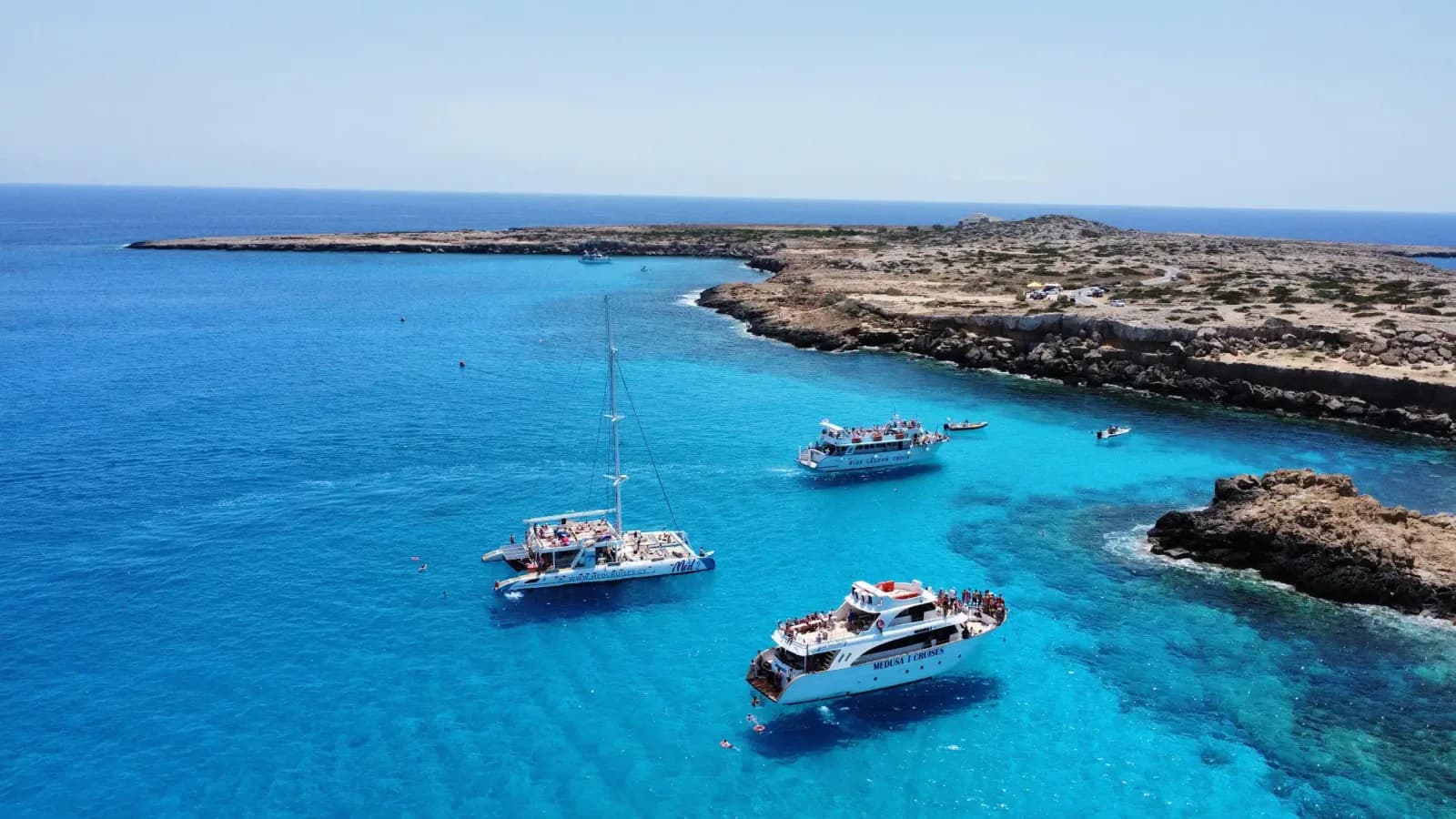
See the Cape Greco coast from the water, pause for a swim or enjoy the view from the deck. Protaras boat trips range from lively family cruises to quieter shared sailings and private boats. The route, boarding place and time of day give each outing its character.
Two Blue Lagoons, two different days
A Protaras cruise explores Cyprus's southeastern coast. Blue Lagoon can also mean the Akamas lagoon in the west, so the departure area tells you which side of the island you are visiting.
Cape Greco and the east coast
Boats head towards the rocky Cape Greco shore, Konnos Bay and coves used for swimming. Some stay near Protaras; longer routes continue towards Ayia Napa or look towards Famagusta. Passing a landmark and stopping there are different experiences.
Akamas and the west coast
The Akamas Blue Lagoon lies by the Latchi side of western Cyprus, well away from the Cape Greco cruise area. It calls for a separate west-coast outing.
Explore the Akamas Blue Lagoon guideWhere boats board
A trip sold to Protaras visitors can leave from several places. Protaras Pier is central; the Pernera harbour and Paralimni Marina area is farther along the coast; and some cruises depart from Ayia Napa.
Three boarding areas
This loads Google Maps, switches on functional cookies and lets Google set its own cookies. You can change this in the cookie settings at any time.
Nissiotis Pier, on the central Protaras waterfront. A convenient starting point for visitors staying near the main resort beaches.
Golden Coast / Pernera harbour and Paralimni Marina share this area north of central Protaras, with different berths and entrances.
Limanaki, the traditional harbour south-west of Protaras. Departures here involve a road journey from Protaras. It is separate from Ayia Napa Marina farther west.
These pins show boarding areas. Your booking gives the exact pier or berth.
Choose the day you want afloat
Boats can trace similar stretches of coast yet feel quite different on board. Start with the pace and company you would enjoy, then use the current trips below to compare actual routes and inclusions.
Coast and swimmingA shared outing with time in the water
A shared cruise lets you settle on deck while the headland, cliffs and bays pass by. Swim-led departures pause in suitable water for guests to enter from the boat. The named stops and time at anchor distinguish itineraries; the coast remains enjoyable from the deck.
Family boats and glass-bottom tripsEntertainment or an underwater view
Family sailings may add games, music or a themed programme to the coastal route. A glass-bottom vessel offers a different pleasure: watching the water beneath the boat without getting in. These are features of particular boats, and visibility through a viewing panel depends on the water.
Sunset cruises and evening tripsThe coast in softer evening light
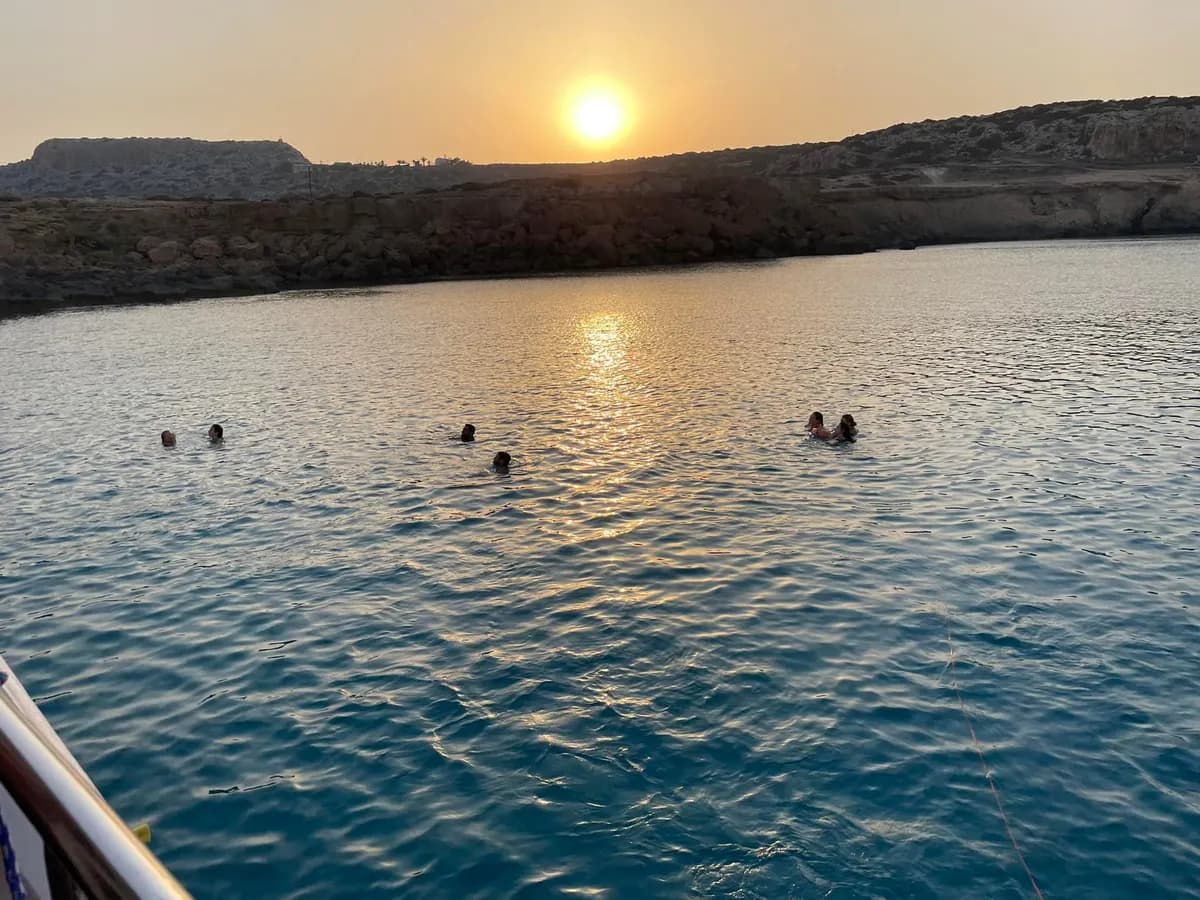
Evening departures revisit familiar coastline as the light changes over the sea and cliffs. Some include a swim; others focus on the deck view, a meal or music. The pleasure is the evening atmosphere as much as the route.
Private boat trips with a skipperFor a group that values its own space
A skippered private trip keeps the boat for your group and can offer a more personal pace. The booking and the skipper's judgement shape the route. Compare the whole-boat price, passenger limit and time afloat with separate shared tickets.
Self-drive boat hire is a separate experience from a crewed cruise. You take responsibility for the craft within the hire company's operating area, while a skippered trip leaves navigation to the crew. Hire terms, briefing and any required documentation depend on the specific craft.
Landmarks along the coast
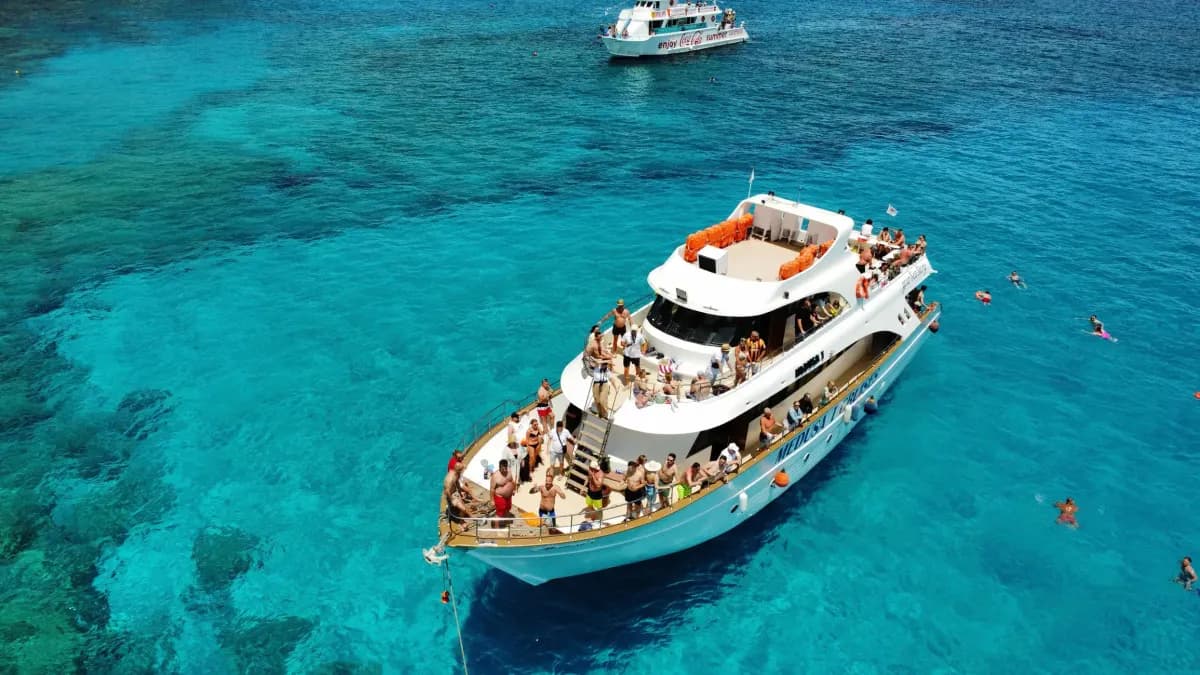
Cape Greco joins the Protaras and Ayia Napa sides of the island in a landscape of coves, cliffs and pale rock. These are useful names to recognize in an itinerary; a view from the sea is part of the pleasure even when the boat does not stop.
Around Cape Greco
This loads Google Maps, switches on functional cookies and lets Google set its own cookies. You can change this in the cookie settings at any time.
The beach and bay between Protaras and Cape Greco.
The coastline below the small white chapel on the eastern side of the cape.
The Palatia sea caves on the south-western side of the cape.
The shore beside Cape Greco’s Blue Lagoon area. The pin is a coastal reference, not a swimming point.
Coastal landmarks for orientation, not a sailing route. Each trip has its own stops.
Konnos Bay
Konnos Bay curves into the coast between Protaras and Cape Greco. From the water you see the bay framed by green slopes, a different perspective from a beach visit. It is also an easy landmark for understanding how far around the headland a route travels.
Sea cliffs, caves and the chapel
The limestone cliffs and sea caves give Cape Greco its distinctive profile from a boat. Above one cave stands the small Agioi Anargyroi chapel. These sights lie within a protected coastal landscape, so a cruise offers a sea-level view rather than access to every opening or shore path.
A Famagusta shoreline view
Some longer itineraries turn towards a distant view of the Famagusta shoreline and Varosha. This is an offshore viewpoint, not a landing or town visit, and it gives the trip a broader coastal sweep than a short Cape Greco circuit.
Season and sea conditions
The long, warm part of the year suits days built around sun, swimming and open decks. The feel of a particular sailing also depends on that day's wind and sea, especially as a route rounds the cape.
Summer swimming
June to September brings warm water and hot days, making swimming a natural focus of the trip. A daytime cruise means plenty of sun on deck; an evening departure offers softer light and a cooler feel.
Spring and autumn
April and May are milder on deck, with cooler evenings. September and October can combine warm swimming water with cooler evenings too. A light layer is useful after a swim or as the sun goes down; sailing schedules vary outside the main season.
On the day
The crew works with the actual sea conditions. A different sheltered stop, a shorter route or a cancelled departure is possible when the planned route is unsuitable.
Calm-looking water at the beach does not always describe conditions around the headland. The current marine forecast is useful context, while the crew makes the sailing decision.
What the day feels like on board
A few onboard details matter as much as the route, particularly if your group includes young children, non-swimmers or someone who needs easier access.
Swimming from a boat
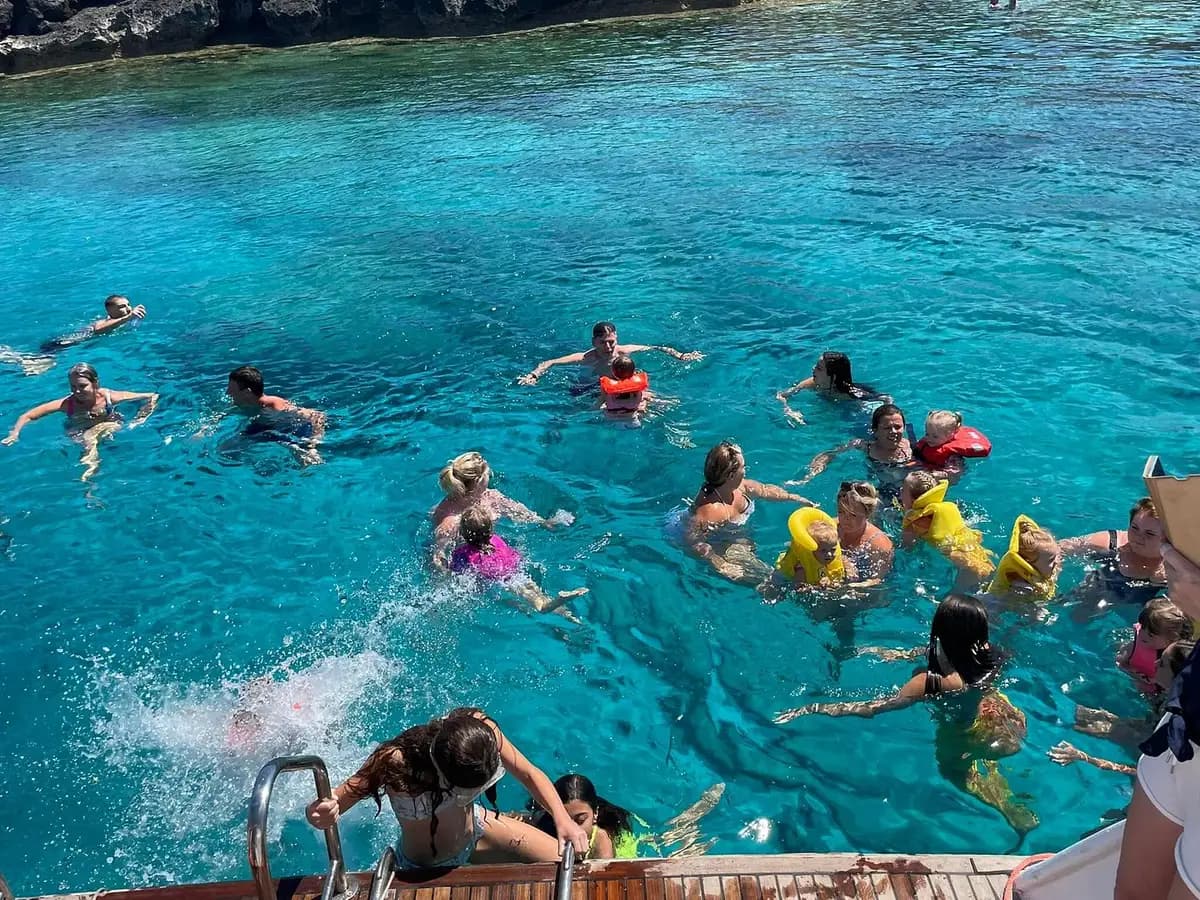
A swim stop starts from the boat rather than a gently shelving beach. Guests enter deeper water and return by the vessel's ladder or steps. You can choose a sightseeing-led outing if that sounds more comfortable than a swim-led one; onboard arrangements vary by vessel.
Space for the whole group
A family boat may offer entertainment and a lively shared atmosphere, while a smaller trip may feel calmer. Seats, shade, toilet access and flotation equipment depend on the actual vessel. For children, the time spent aboard and between stops can matter as much as the activities themselves.
Moving around the vessel
Getting aboard involves the pier and gangway as well as the vessel, and movement on deck can be different from movement on land. Accessibility varies with the departure point and boat; people who need step-free access will want the boarding setup for the exact sailing.
A small bag for the trip
Sun protection, drinking water and a light layer make time on deck more comfortable. For a swimming trip, bring swimwear and a towel. Food, snorkelling gear and road transfers are trip-specific inclusions, so they are best read in the selected listing.
Current Protaras boat trips
Each listing contains the details that can change: dates, availability, price, exact meeting point, vessel, route, inclusions and cancellation terms. Check the page for your date; a visible listing does not confirm availability.
Protaras, Cyprus
Chill-Out Turtle Cruise (Lunch optional)
Discover the beauty of the Protaras and Ayia Napa coastline on this 4-hour VIP chill-out cruise. Swim in turquoise waters, explore sea caves, and spot sea turtles at Turtle Bay — all aboard a spacious, fully equipped ...
Small group · max 10
4.7from 570+ reviews
Free cancellation up to 24h before
4h
From €32 / person
View Activity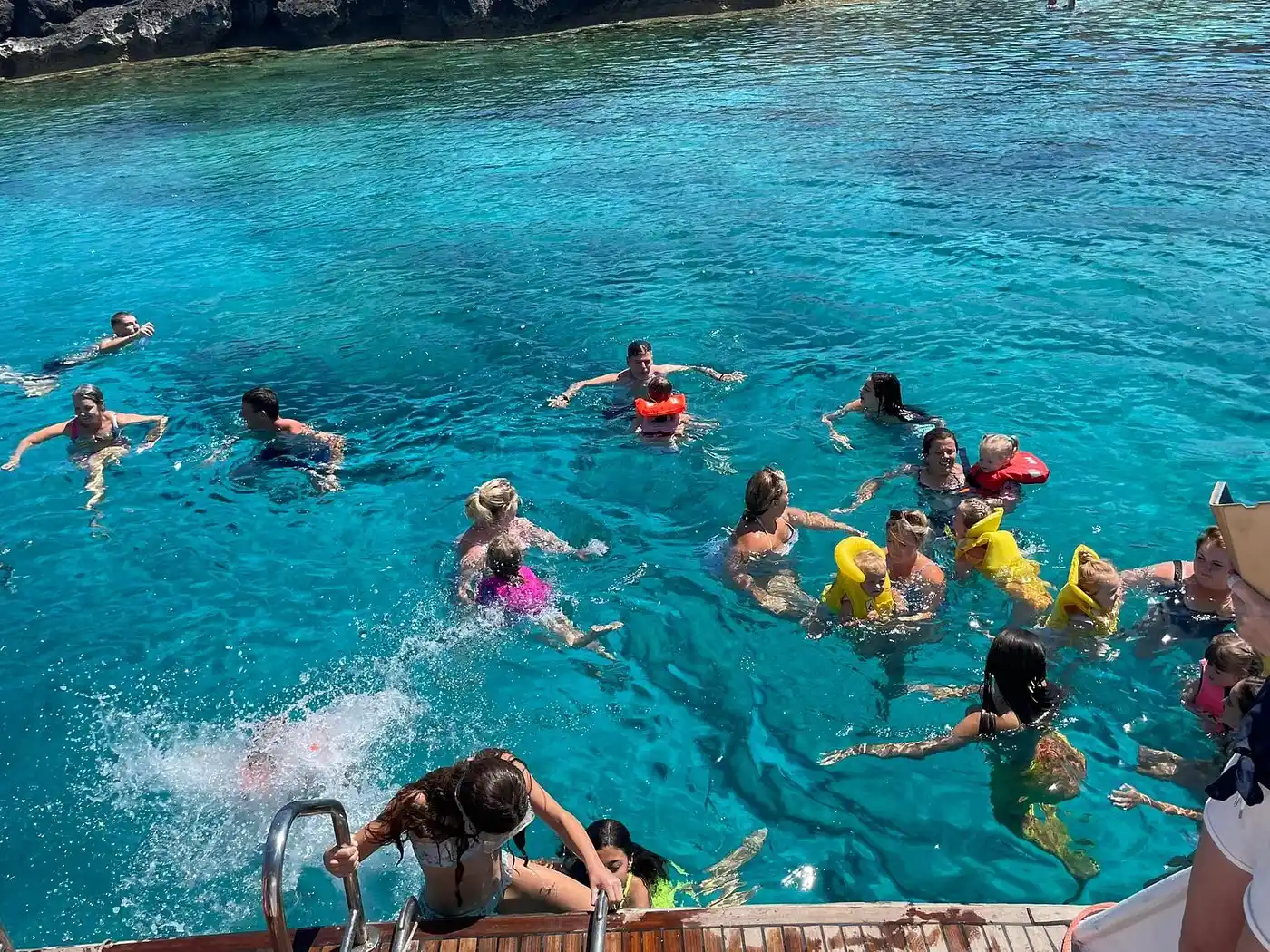
Protaras, Cyprus
Mermaid Cruise Family Boat Adventure
Enjoy a magical 2.5-hour family boat trip departing from Protaras, perfect for children and parents alike. The Mermaid Cruise offers fun, entertainment, and stunning coastal views — all in one unforgettable experience.
Small group · max 10
Free cancellation up to 24h before
2.5h
From €41 / person
View ActivityQuestions travellers ask before booking
Which Blue Lagoon does a Protaras boat trip visit?
A Protaras coastal cruise using the name Blue Lagoon means water on the Cape Greco side of southeastern Cyprus. The Akamas Blue Lagoon belongs to a separate trip from the Latchi area in the west. The itinerary tells you whether the east-coast lagoon is a view or a swim stop.
Where do boat trips from Protaras actually board?
Common boarding areas are Protaras Pier, the co-located Pernera harbour and Paralimni Marina area, and Ayia Napa Harbour. The booking details give the particular pier or berth; a Protaras trip title alone does not identify it.
What is a swim stop like?
The boat pauses in suitable water and swimmers enter from the vessel, then return by its ladder or steps. This feels different from a beach swim because the water is deeper. The duration and onboard support depend on the particular trip.
Are glass-bottom boats and turtle trips the same thing?
No. Glass-bottom describes a vessel with an underwater viewing panel. A turtle-themed itinerary refers to wildlife that may be seen along the coast. Clear viewing water and wild turtle sightings are never assured on a particular sailing.
Is private boat hire the same as a private skippered cruise?
No. A skippered private cruise has a crew navigating the boat for your group. Self-drive hire means you operate the hired craft within its permitted area under the hire terms. The second choice involves a briefing and potentially different documentation or insurance requirements.
About this guide
Guide reviewed 11 October 2026. Routes, departure details and onboard facilities belong to each current trip listing.
Photographs from earlier Cyprus Bucket List trip pages illustrate the coast and experience; individual vessels and stops vary.