
Swim with Turtles in Cyprus
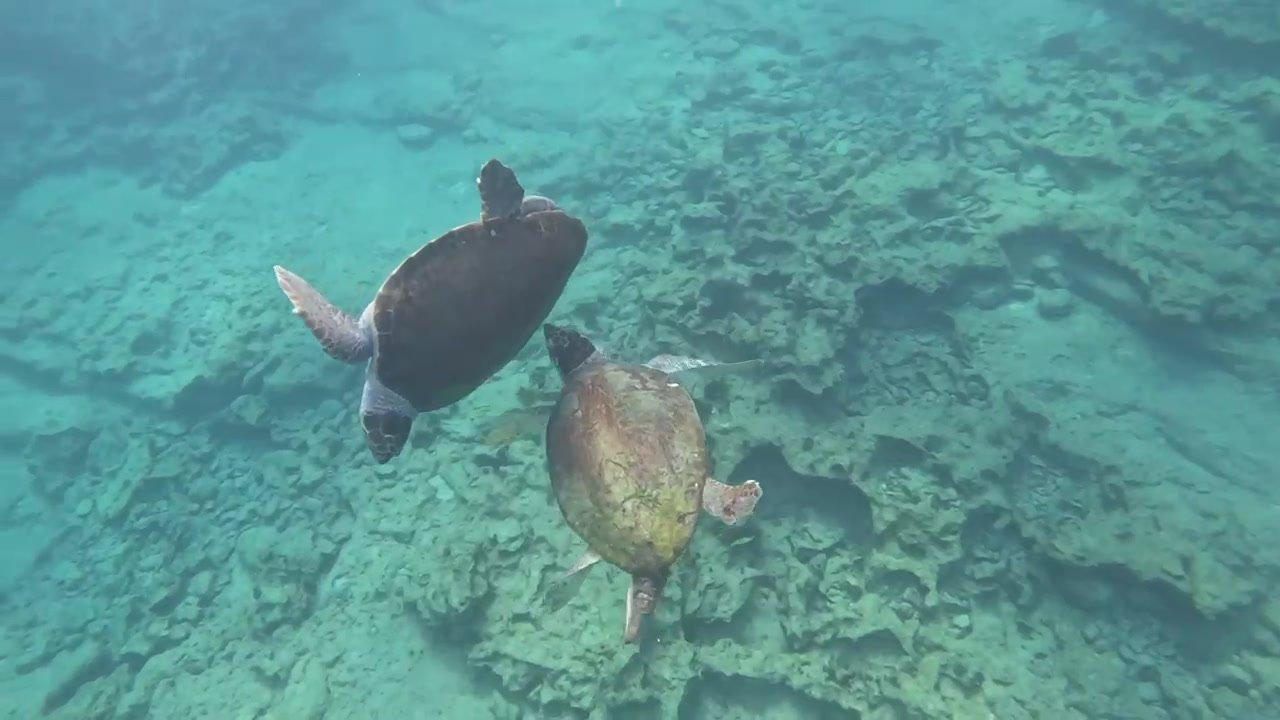
Green and loggerhead turtles feed in the shallow water around Cyprus. Here is every way to see them, from a free swim off the beach to a glass-bottom boat, with what each costs, the best months and how to behave in the water. Plus how to try scuba diving.
Updated
Essentials
- Best months to see turtles
- May to Nov
- Sea temperature through the year
- 17 to 28 °C
- Green and loggerhead turtles nest here
- 2 species
- Nesting season on the beaches
- Mid-May to Sep
- Look, never touch or feed
- Touching, chasing or feeding a turtle is harassment of a protected species: up to €17,000, up to three years in prison, or both.
- Sightings are never guaranteed
- Turtles are wild and move freely. Be wary of any trip that promises them: feeding to make sightings reliable harms turtles.
- Lara beach rules
- From 1 June to 30 September: no umbrellas, sunbeds or tents, and off the beach an hour before sunset. No boats from 1 May to 31 October. All Lara-Toxeftra rules
Where to swim with turtles in Cyprus
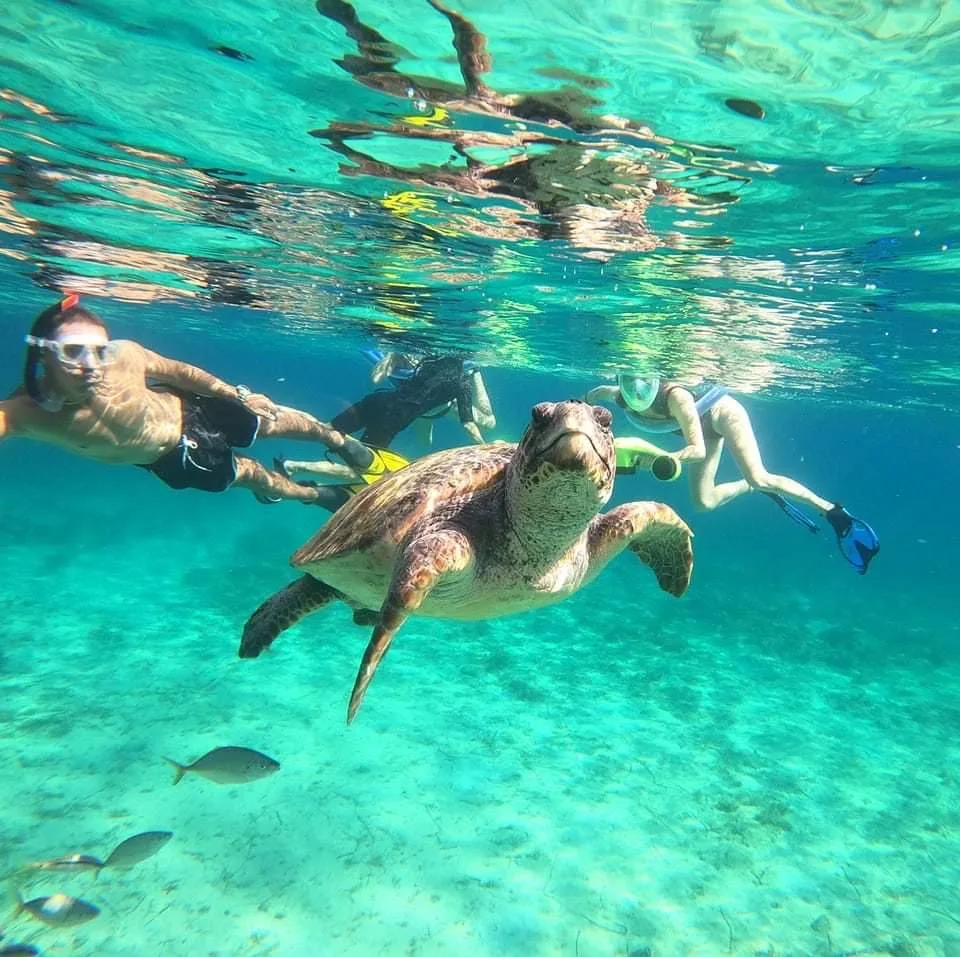
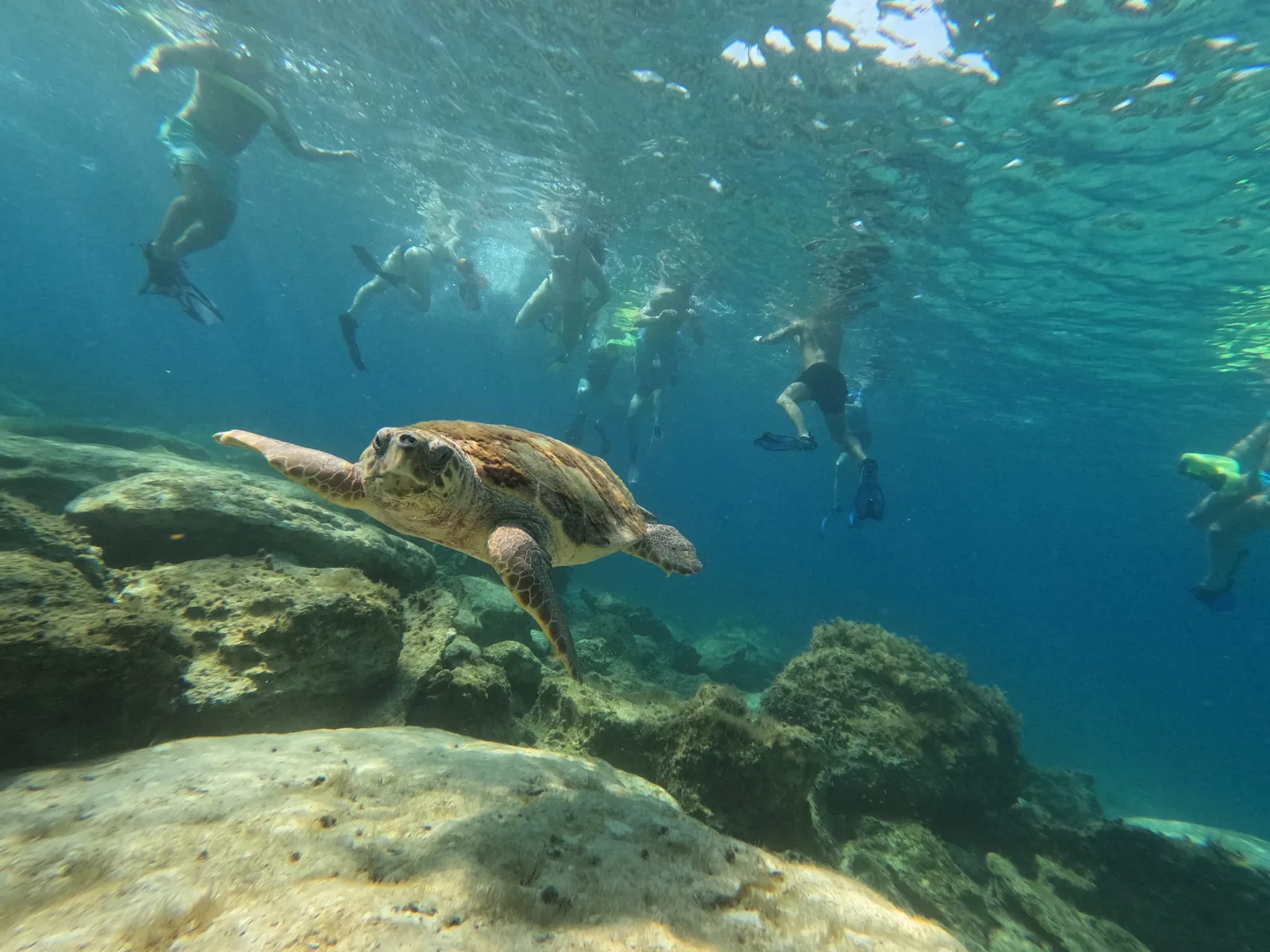
Yes, you can swim with turtles in Cyprus. Turtles are common in shallow coastal water in summer, where they come to feed. They are wild animals, though, and no one can promise you will see one on a given day.
No official body publishes sighting rates, so the table below sums up what the evidence says about each area. Treat it as a guide to your chances, not a promise.
| Area | How people see turtles | Honest likelihood |
|---|---|---|
| Paphos coast, north of the harbour towards Chlorakas | Guided snorkel trips from the shore, often with sea scooters; boat cruises from Paphos harbour | A good chance in season, May to November. No guarantee, and April and early May are the least certain months. |
| Protaras and Cape Greco, including Green Bay and Konnos | Snorkelling and diving from shore, boat cruises and glass-bottom boats | The area where turtles are most often reported from shore. The same official report warns that part of this comes from people feeding turtles, which harms them. |
| Latchi, Polis and the Akamas coast | Boat trips and dives | Possible: Chrysochou Bay is the main loggerhead nesting and feeding area, but no sighting figures exist. Boats may not pass or anchor at Lara-Toxeftra from 1 May to 31 October. |
| Limassol, Amathus | Shallow shore dives | Named in an official report as a place where turtles visit to feed on seagrass. No sighting figures. |
| Larnaca, the Zenobia wreck | Deep dives for certified divers only | An occasional bonus. Not a reason to choose the dive. |
Turtle areas on the map
The pins mark areas, not meeting points. Your operator gives the exact place to meet.
This loads Google Maps, switches on functional cookies and lets Google set its own cookies. You can change this in the cookie settings at any time.
Select a place on the map to see its details.
Ways to see turtles in Cyprus
From a free swim off the beach to a seat on a glass-bottom boat, here is every way to look for turtles, what it typically costs and who it suits.
Snorkel and swim
1 trip to book
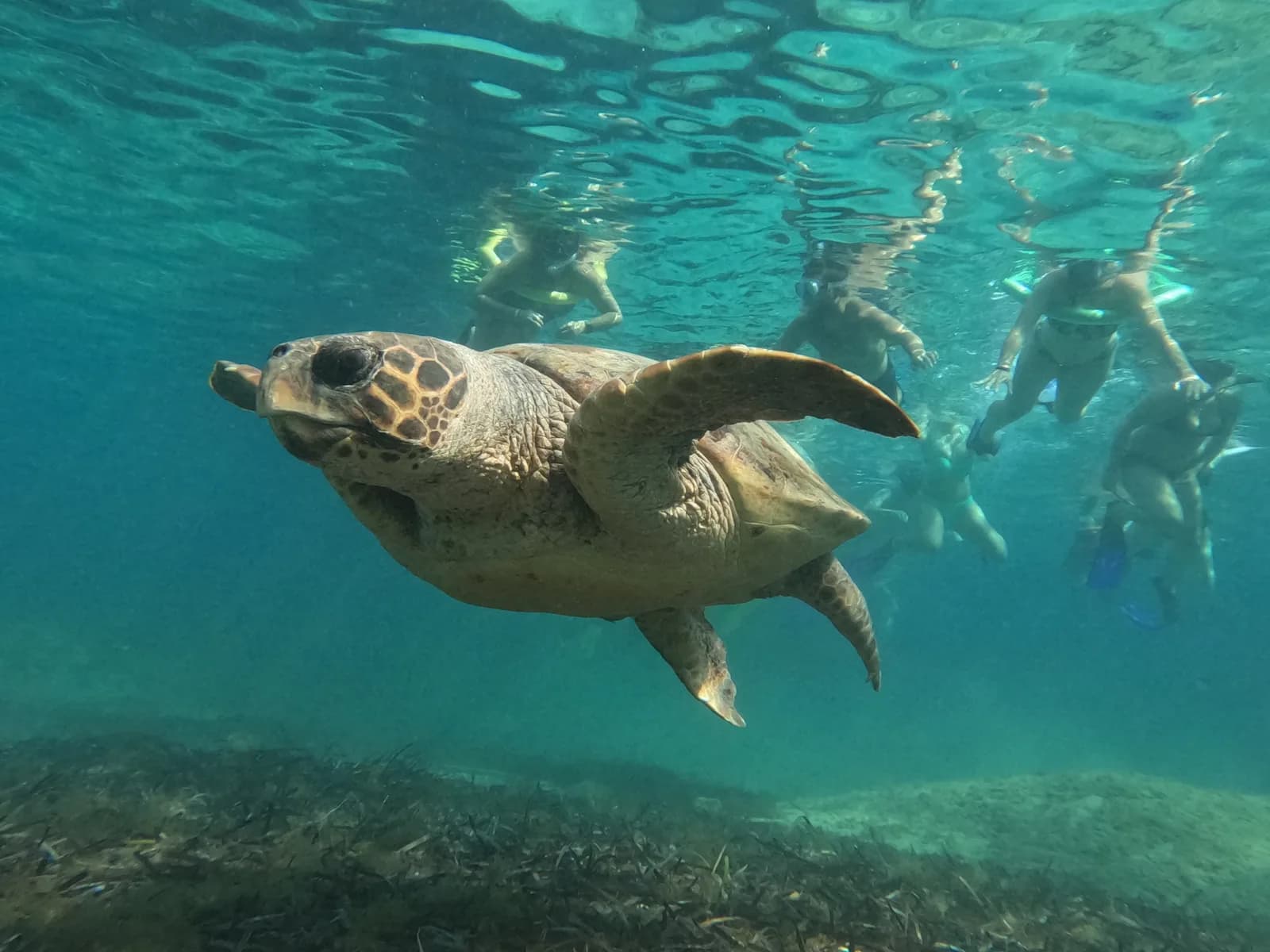
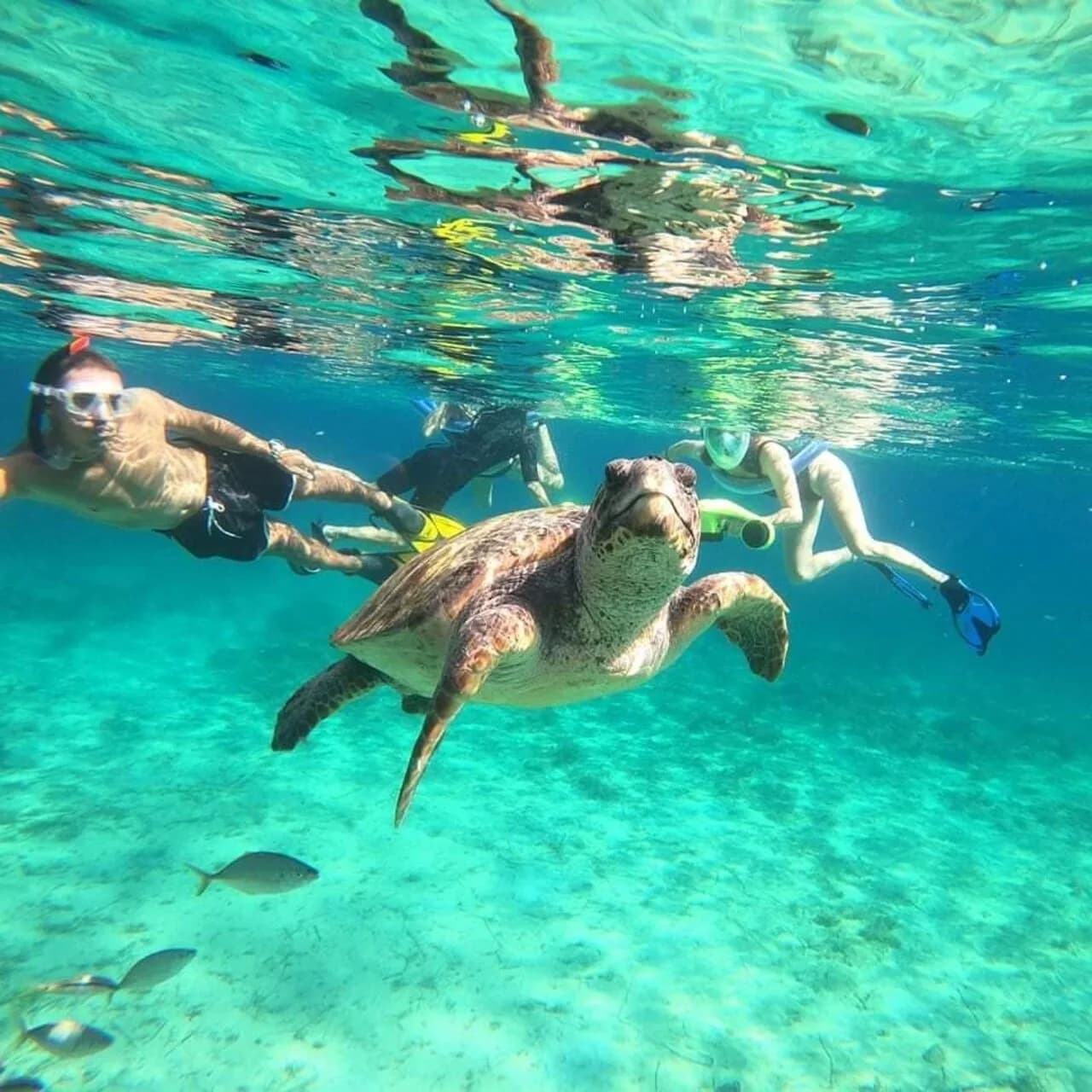
Turtles feed in shallow water close to the shore, so most people see them with a mask and snorkel. Go with a guide, or on your own if you are a confident swimmer.
Guided snorkel and sea scooter trips
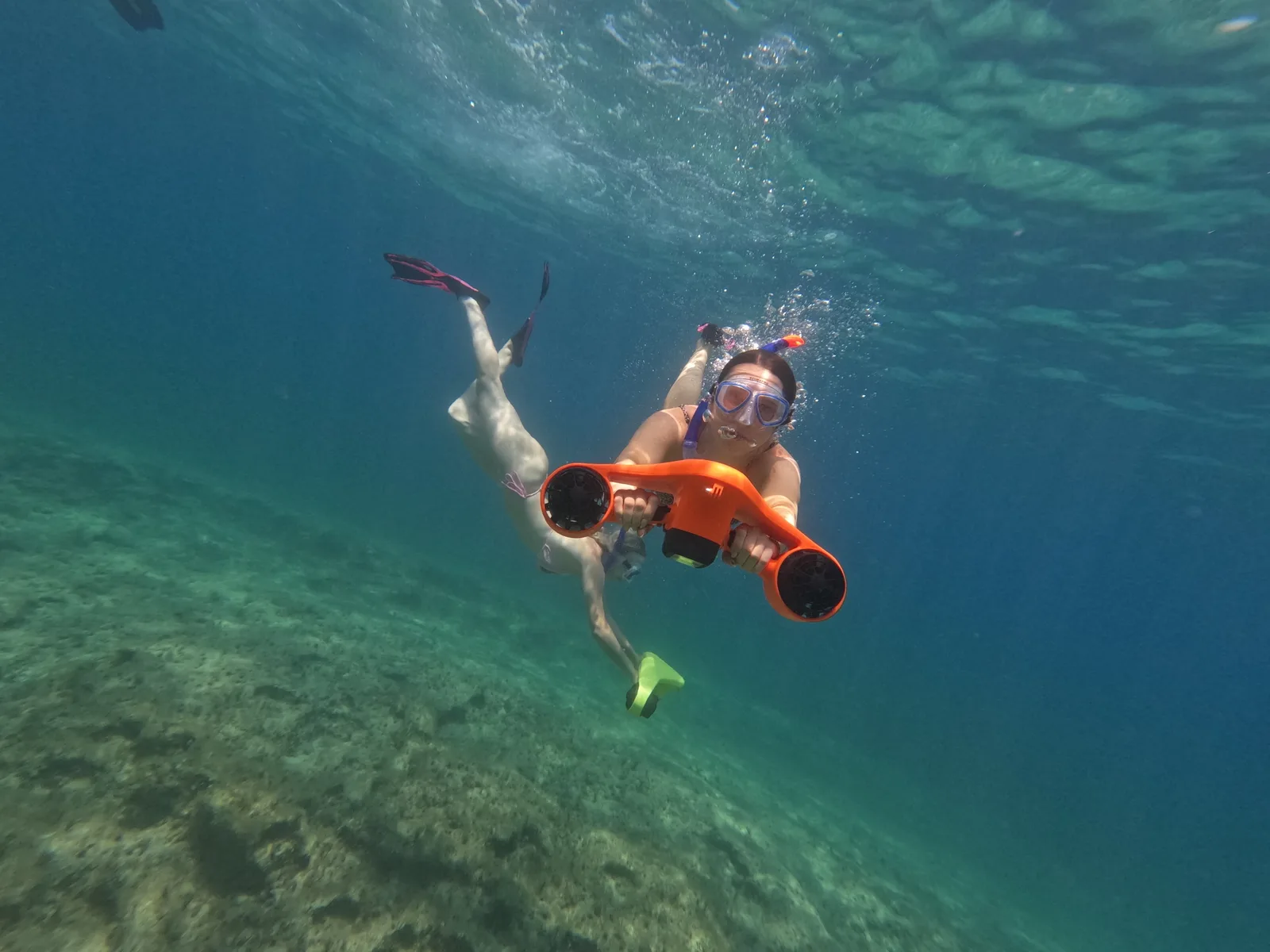
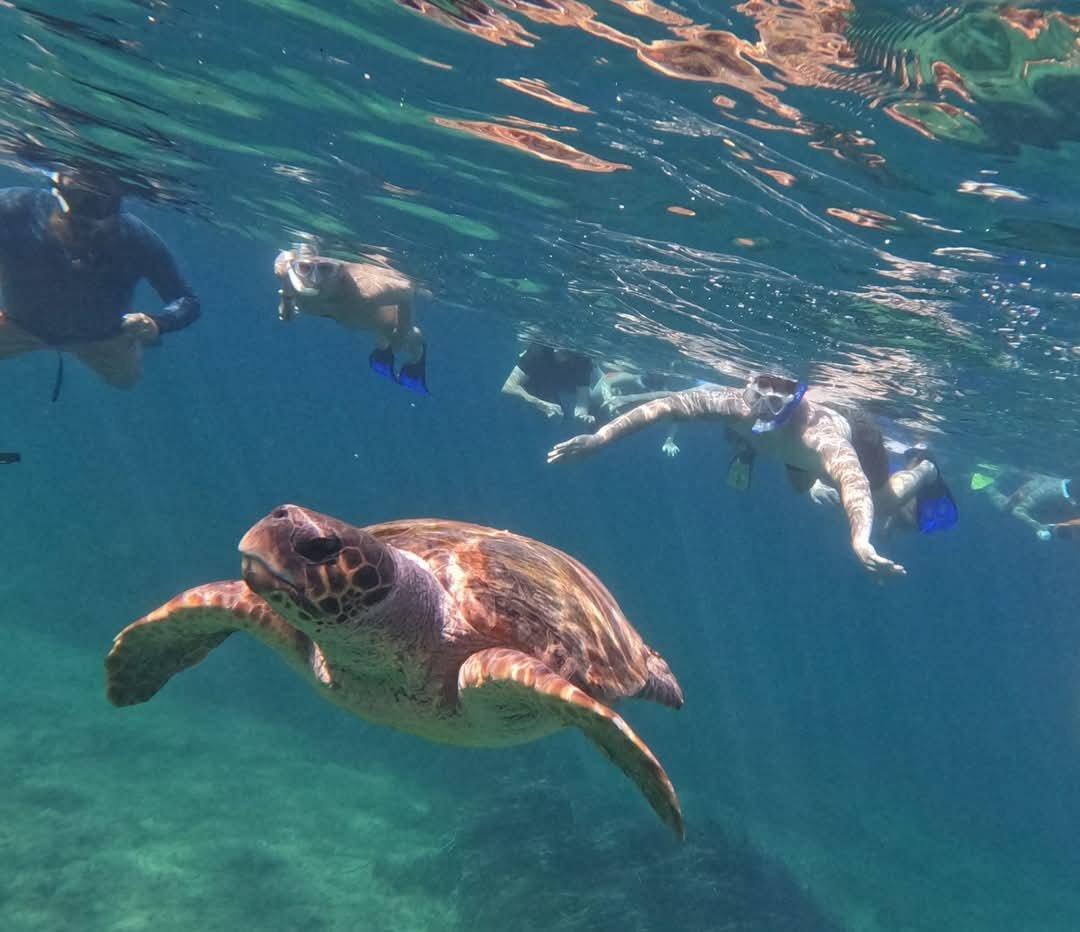
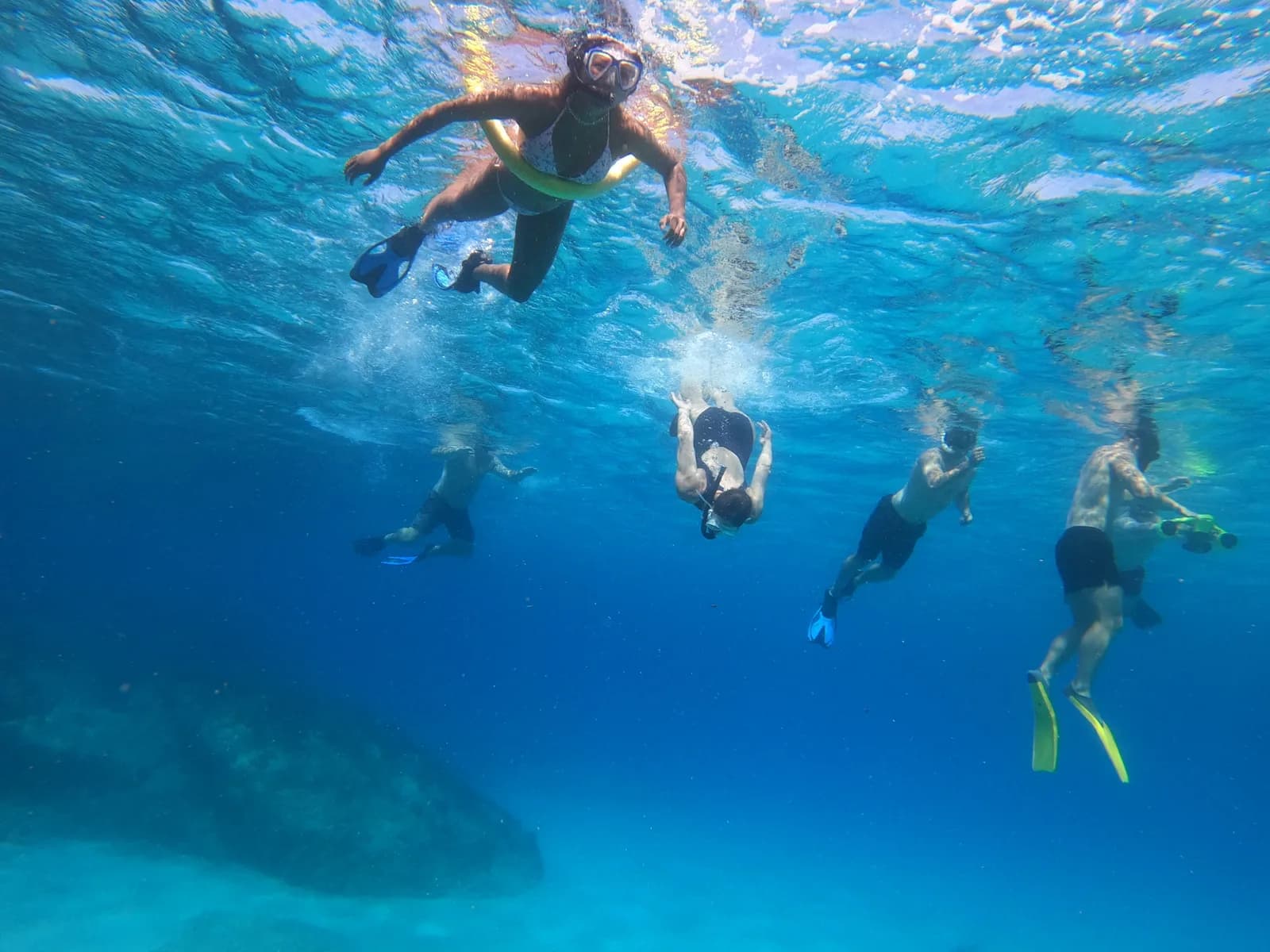
A guide leads a small group into the water to look for turtles, often with shared handheld sea scooters.
- Where
- The Paphos coast, entering the sea from the shore near the Tombs of the Kings.
- Check first
- Group size, whether scooters are shared, and the policy if no turtles are seen: one operator gives no refund.
- Price on this site
- From €50 per person
- How long
- About 3.5 to 4 hours in total, with around an hour in the water.
- Suits
- Confident swimmers. Minimum ages range from 6 to 10, depending on the operator.
Snorkelling from the shore on your own
The simplest way: walk in from a beach where turtles feed and look around with a mask and snorkel.
- Where
- Shore entries around Protaras and Cape Greco, such as Green Bay and Konnos.
- Check first
- Sea conditions and boat traffic, and swim with a buddy. Never follow, touch or feed a turtle.
- Typical price
- Free, apart from your own mask, snorkel and fins.
- How long
- At your own pace.
- Suits
- Confident swimmers who are happy in open water without a guide.
Kayak or paddleboard
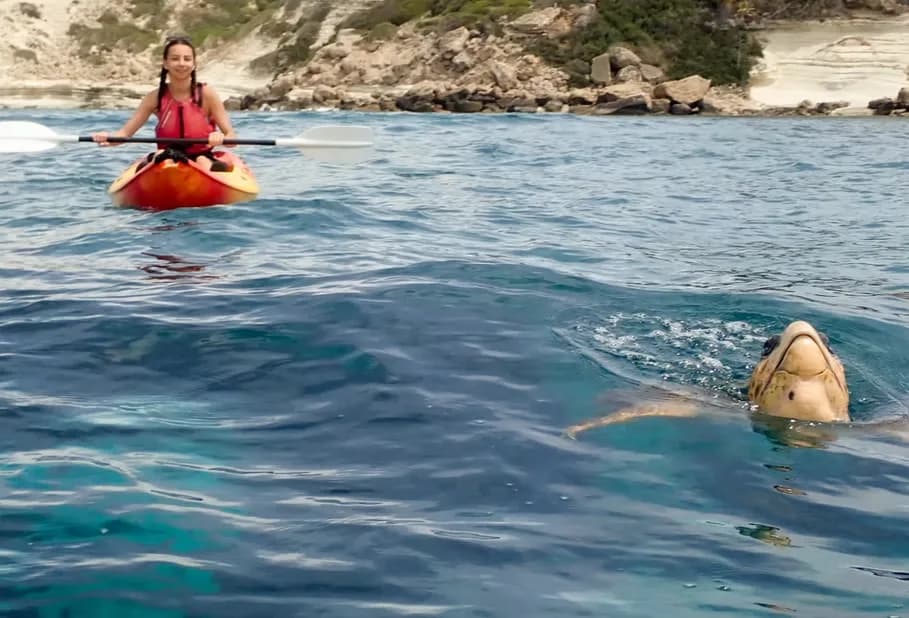
Paddle along the coast and keep an eye out: a turtle sometimes surfaces near a kayak to breathe.
- Where
- Guided kayak trips on the Paphos coast, at Cape Greco and near Limassol.
- Check first
- Wind and swell forecasts, and keep your distance if a turtle comes up.
- Typical price
- Guided kayak trips from about €50; private trips from about €130. Paddleboard hire varies, so ask the operator.
- How long
- About 2.5 to 6 hours for a guided trip.
- Suits
- Active visitors. This is a paddling trip first; any turtle is a bonus.
By boat
1 trip to book
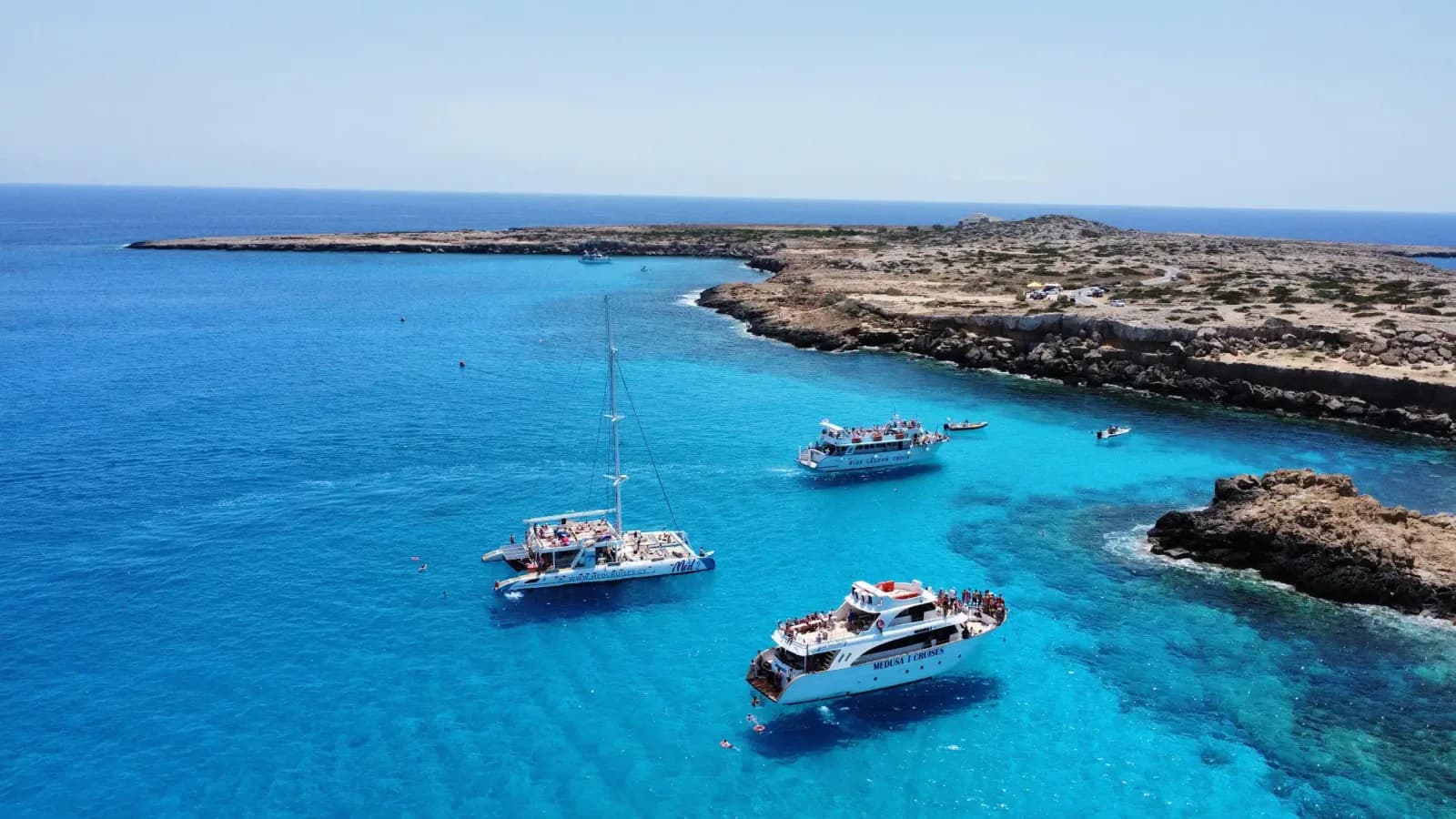
Boats suit families and non-swimmers. Some cruises stop for a swim where turtles are often seen, and on a glass-bottom boat you watch through the hull and stay dry.
Turtle boat cruises
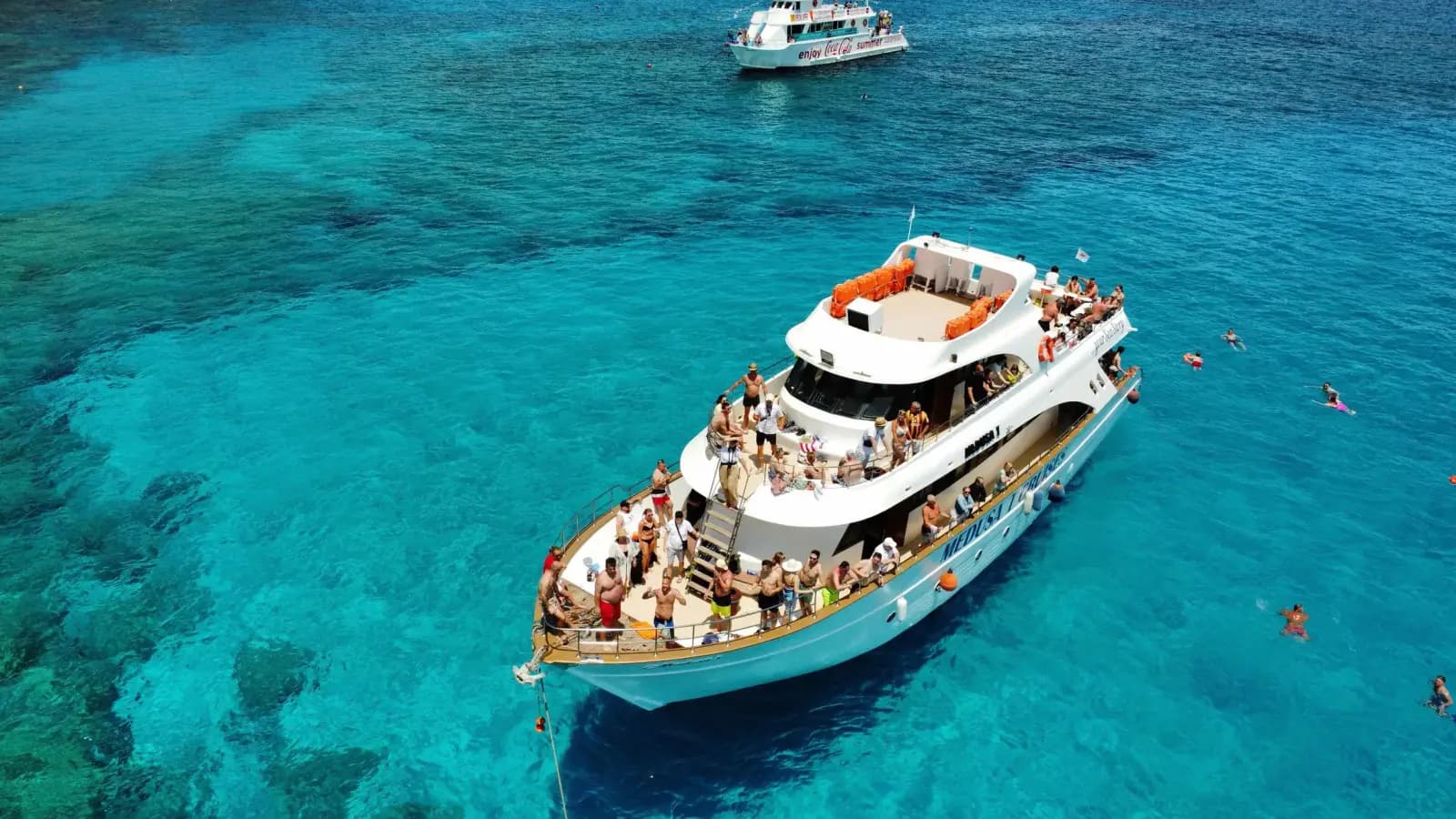
A cruise with a swimming stop where turtles are often seen, usually combined with sea caves or a lagoon.
- Where
- Protaras, for Turtle Bay or Turtle Cove near Cape Greco; Paphos harbour; Latchi, where turtles are a possible bonus.
- Check first
- How long the turtle stop is, and avoid boats that feed turtles to attract them.
- Price on this site
- From €32 per person
- How long
- About 2 to 4 hours.
- Suits
- Families and anyone who would rather swim from a boat than from the shore.
Glass-bottom boats
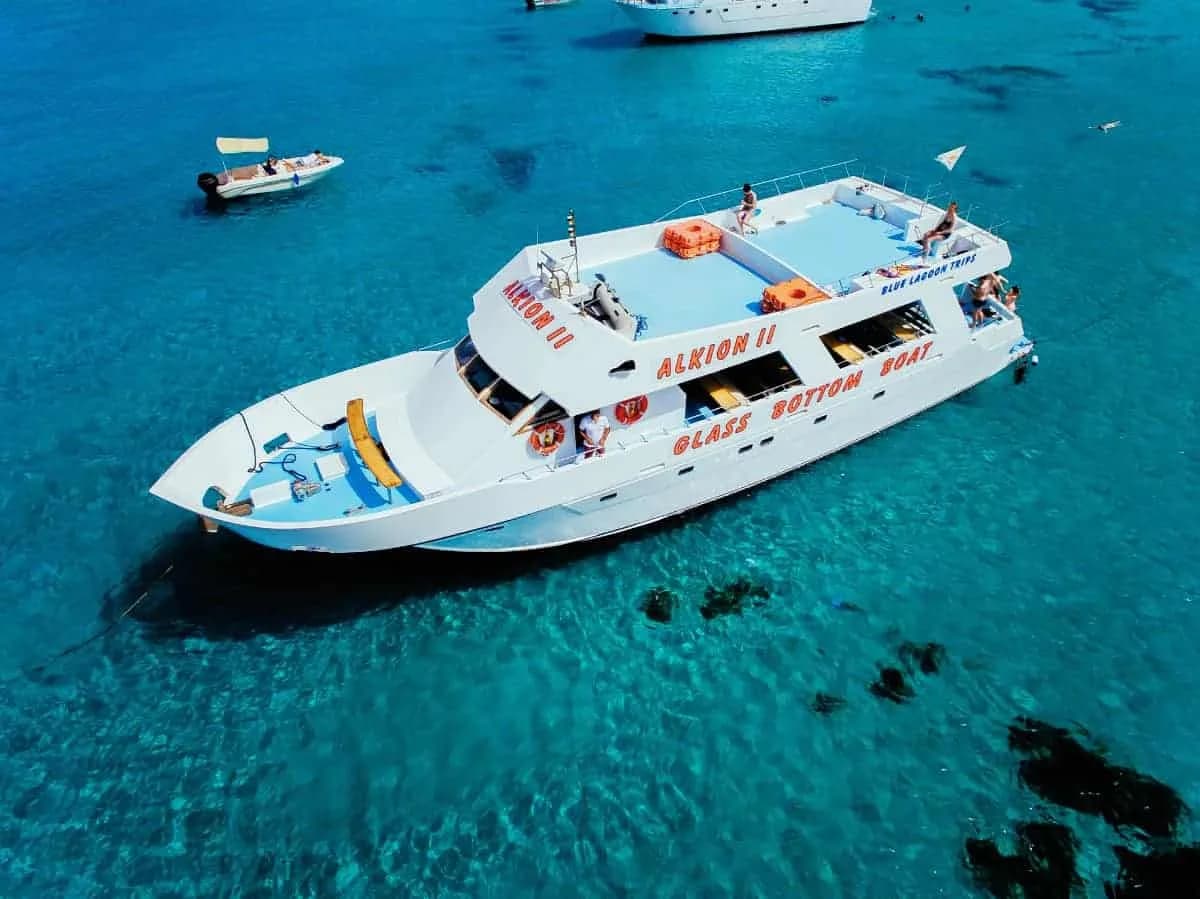
Watch the seabed through the hull without getting wet. Some trips add a swimming stop.
- Where
- Paphos harbour and Protaras.
- Check first
- Whether turtles are part of the route at all: many trips focus on a wreck or a lagoon instead.
- Typical price
- About €20 to €30 per adult in Paphos. In Protaras, price varies, so ask the operator.
- How long
- About 1.5 to 3 hours.
- Suits
- Non-swimmers, young children and anyone who wants to stay dry.
Scuba diving
7 trips to book
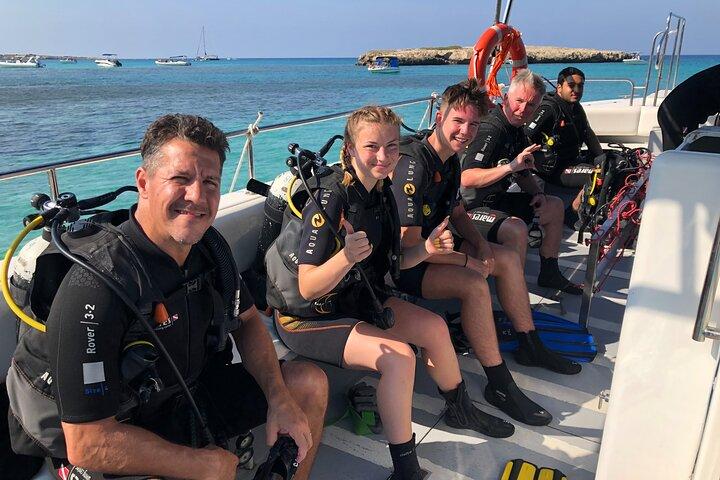
Divers sometimes meet turtles at shallow sites near Protaras and Limassol, and now and then on the Zenobia wreck. If you have never dived, the scuba part of this guide explains how to start.
 Photo: dronepicr, CC BY 2.0
Scuba dives where turtles are seen
Divers meet turtles at several shallow sites, and occasionally on the Zenobia wreck.
- Where
- Green Bay and De Costa near Protaras, Amathus near Limassol, and the Zenobia off Larnaca.
- Check first
- The dive centre chooses the site on the day. Turtles are a bonus, never promised.
- Typical price
- An introductory dive about €60 to €90; two Zenobia dives about €110 to €180.
- How long
- Half a day for one or two dives.
- Suits
- Beginners from age 10 at shallow sites; certified divers for deeper sites.
The nesting beaches
Guide only
Green and loggerhead turtles lay their eggs on a few protected beaches around the Akamas peninsula and Polis. You can visit in daylight. The turtles come ashore to nest at night, so do not expect to see it.
 Photo: Dm Bsg, CC BY 3.0
Lara and Toxeftra, the nesting beaches
See where green turtles nest, on wild protected beaches on the Akamas peninsula.
- Where
- The west coast of the Akamas peninsula, reached by an unpaved track; guides advise a 4x4 or a guided tour.
- Check first
- The seasonal rules below. Follow signs and wardens, and do not expect to see nesting or hatching.
- Typical price
- Free. Visitors describe a turtle information centre near Lara Bay, but no official opening hours or fees exist.
- How long
- Daylight only in summer: the beach closes an hour before sunset from 1 June to 30 September.
- Suits
- Nature lovers who want to see the nesting beaches, not the turtles themselves.
 Photo: Krzysztof Ziarnek, Kenraiz, CC BY-SA 4.0
Volunteering
The turtle conservation programme in Cyprus is run by MedTRACS for the Department of Fisheries and Marine Research.
- Where
- Nesting beaches such as Lara-Toxeftra and Polis, which staff patrol daily in the nesting season.
- Check first
- We found no current public call for volunteers, so contact MedTRACS directly to ask.
- Typical price
- Not published.
- How long
- Not published.
- Suits
- People with time to give and a serious interest in conservation work.
Turtle and scuba trips to book
Trips listed on Cyprus Bucket List. Each trip page has the current price, meeting point and dates.
Costs and times compared
All the ways side by side. Where you can book a way here, the price is the lowest on this site; the others are typical market prices.
| Way | Typical price | How long | Suits |
|---|---|---|---|
| Guided snorkel and sea scooter trips Book here | From €50 per person on this site | About 3.5 to 4 hours in total, with around an hour in the water. | Confident swimmers. Minimum ages range from 6 to 10, depending on the operator. |
| Snorkelling from the shore on your own | Free, apart from your own mask, snorkel and fins. | At your own pace. | Confident swimmers who are happy in open water without a guide. |
| Kayak or paddleboard | Guided kayak trips from about €50; private trips from about €130. Paddleboard hire varies, so ask the operator. | About 2.5 to 6 hours for a guided trip. | Active visitors. This is a paddling trip first; any turtle is a bonus. |
| Turtle boat cruises Book here | From €32 per person on this site | About 2 to 4 hours. | Families and anyone who would rather swim from a boat than from the shore. |
| Glass-bottom boats | About €20 to €30 per adult in Paphos. In Protaras, price varies, so ask the operator. | About 1.5 to 3 hours. | Non-swimmers, young children and anyone who wants to stay dry. |
| Scuba dives where turtles are seen | An introductory dive about €60 to €90; two Zenobia dives about €110 to €180. | Half a day for one or two dives. | Beginners from age 10 at shallow sites; certified divers for deeper sites. |
| Lara and Toxeftra, the nesting beaches | Free. Visitors describe a turtle information centre near Lara Bay, but no official opening hours or fees exist. | Daylight only in summer: the beach closes an hour before sunset from 1 June to 30 September. | Nature lovers who want to see the nesting beaches, not the turtles themselves. |
| Volunteering | Not published. | Not published. | People with time to give and a serious interest in conservation work. |
| Discover Scuba, an introductory dive Book here | From €80 per person on this site | Half a day, including the briefing and equipment fitting. | Beginners aged 10 and over who are comfortable in the water. |
| Open Water course Book here | From €480 per person on this site | Usually 3 to 5 days. | Anyone who wants to keep diving. Junior courses start at 10, with a 12 metre limit for ages 10 and 11. |
| The Zenobia wreck, for certified divers | About €110 to €180 for two dives. | Half a day for two dives, or a full day with transport from other towns. | Certified divers, usually at Advanced Open Water level with recent dives. Not for beginners. |
Prices are typical euro listings from operators and booking sites in November 2026. They change by season and operator, so confirm the price with the operator before you book.
What a guided turtle snorkel is like
On the guided trips we looked at, the day follows a similar pattern:
- You meet at a beach or harbour, get a short safety briefing and are fitted with a mask, snorkel and fins.
- You enter the water from the shore or a boat, and a guide stays in the water with the group.
- The guide leads you to shallow areas where turtles come to feed and rest. Floating noodles are usually there for extra support.
- Where sea scooters are offered, they are shared, so you take turns. They are optional.
- Expect around an hour in the water. Some trips include photos.
A sea scooter is a small handheld electric scooter that pulls you through the water as you snorkel. It makes covering distance easier, but it should never be used to chase or crowd a turtle.
Turtles may not appear. Ask before you book what happens if none are seen: at least one operator gives no refund.
The best time to see turtles in Cyprus
Operators run turtle trips from April and give May to November as the best season. April and early May are the least certain months.
Turtles nest from about mid-May to the end of September, and hatchlings emerge from roughly July into early autumn. Nesting happens at night on protected beaches, so no trip can show it to you.
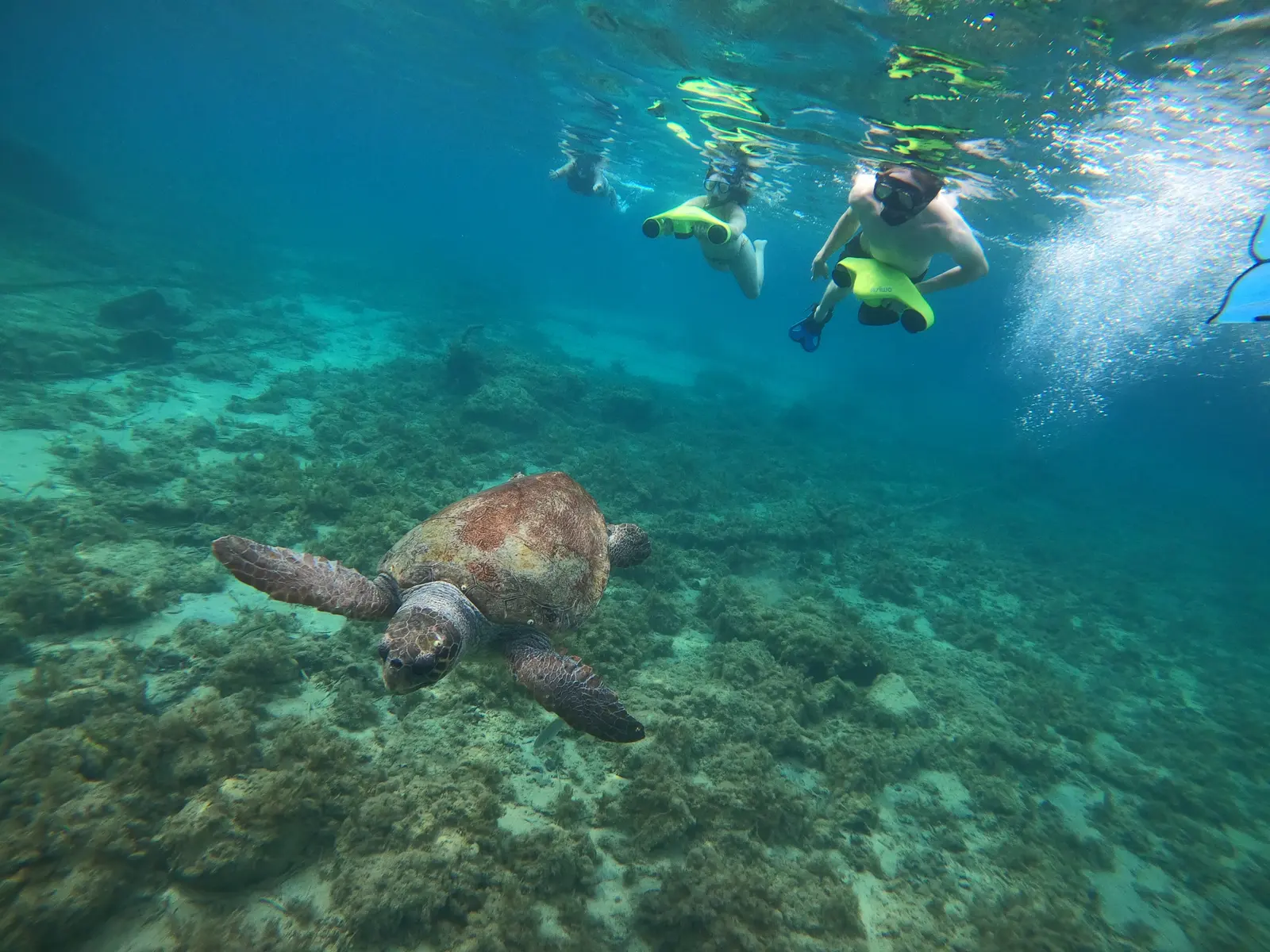
- Main season
- Early season, least certain
- Outside the main season
- January: Outside the main season
- Sea
- 18.1°C
- February: Outside the main season
- Sea
- 17.2°C
- March: Outside the main season
- Sea
- 17.2°C
- April: Early season, least certain
- Sea
- 18.2°C
- May: Main season
- Sea
- 20.7°C
- June: Main season
- Sea
- 24.3°C
- July: Main season
- Sea
- 27.5°C
- August: Main season
- Sea
- 28.5°C
- September: Main season
- Sea
- 27.3°C
- October: Main season
- Sea
- 25.2°C
- November: Main season
- Sea
- 22.8°C
- December: Outside the main season
- Sea
- 20.2°C
Sea temperatures are 10-year averages for Paphos. The east coast, around Ayia Napa and Protaras, is within about 1 degree.
Turtles you may meet: green and loggerhead
 Photo: Brocken Inaglory, CC BY-SA 3.0
Green turtle
In the Mediterranean, green turtles nest almost only in Cyprus and Turkey. Their most important nesting area in Cyprus is Lara-Toxeftra, on the west coast of the Akamas peninsula.
 Photo: Savvas Michaelides, CC BY-SA 4.0
Loggerhead turtle
The main loggerhead nesting beaches are around Polis and Chrysochou Bay, where wide seagrass meadows give both species somewhere to feed.
Both species nest in Cyprus and both are protected by law, as they have been since 1971.
You may still read that both are endangered. That is out of date for the green turtle, whose global status was revised to Least Concern in October 2025. The loggerhead is listed as Vulnerable.
More than 2,000 nests a year have been reported in recent seasons, but only about one or two hatchlings in every thousand survive to breed. That is why the rules below matter.
Swimming with turtles responsibly
You are a visitor in the turtle's habitat. Follow these rules in the water and on the beach.
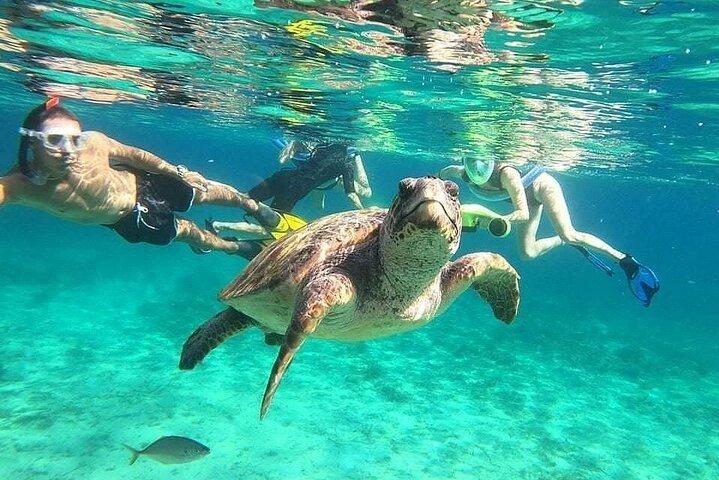
- Watch from a distance. Do not touch, feed, chase or crowd a turtle, and let it decide how close it comes.
- If a turtle makes sudden movements, stop approaching and move away.
- Never use a sea scooter or a boat to follow a turtle.
- Never feed turtles to bring them closer. Feeding counts as harassment, and an official report on diving in Cyprus warns that it harms turtles and has led to injuries to bathers.
- On a nesting beach, keep to existing paths, fill in any holes you dig in the sand and take your rubbish home.
- Do not use lights or flash near a nesting turtle or hatchlings.
Harassing a protected turtle, including feeding it to get a photo, can lead to a fine of up to €17,000, up to three years in prison, or both, according to the Department of Fisheries and Marine Research.
Lara-Toxeftra: seasonal rules
Lara-Toxeftra, on the Akamas peninsula, is one of the most important turtle nesting areas in the Mediterranean and a protected area with its own rules.
- 1 May to 31 October: boats may not pass through or anchor in the protected area. Licensed small-scale fishers are exempt.
- 1 June to 30 September: no umbrellas, sunbeds, tents or caravans on the beach, and no staying on the beach from one hour before sunset.
- All year: no driving on the beach, no fires or barbecues, no dumping rubbish and no collecting ghost crabs.
- Breaking the beach rules can bring an out-of-court fine of up to €8,543.
Who can join: ages, swimming and health
Every operator sets its own rules, but these are the patterns we found across Cyprus.
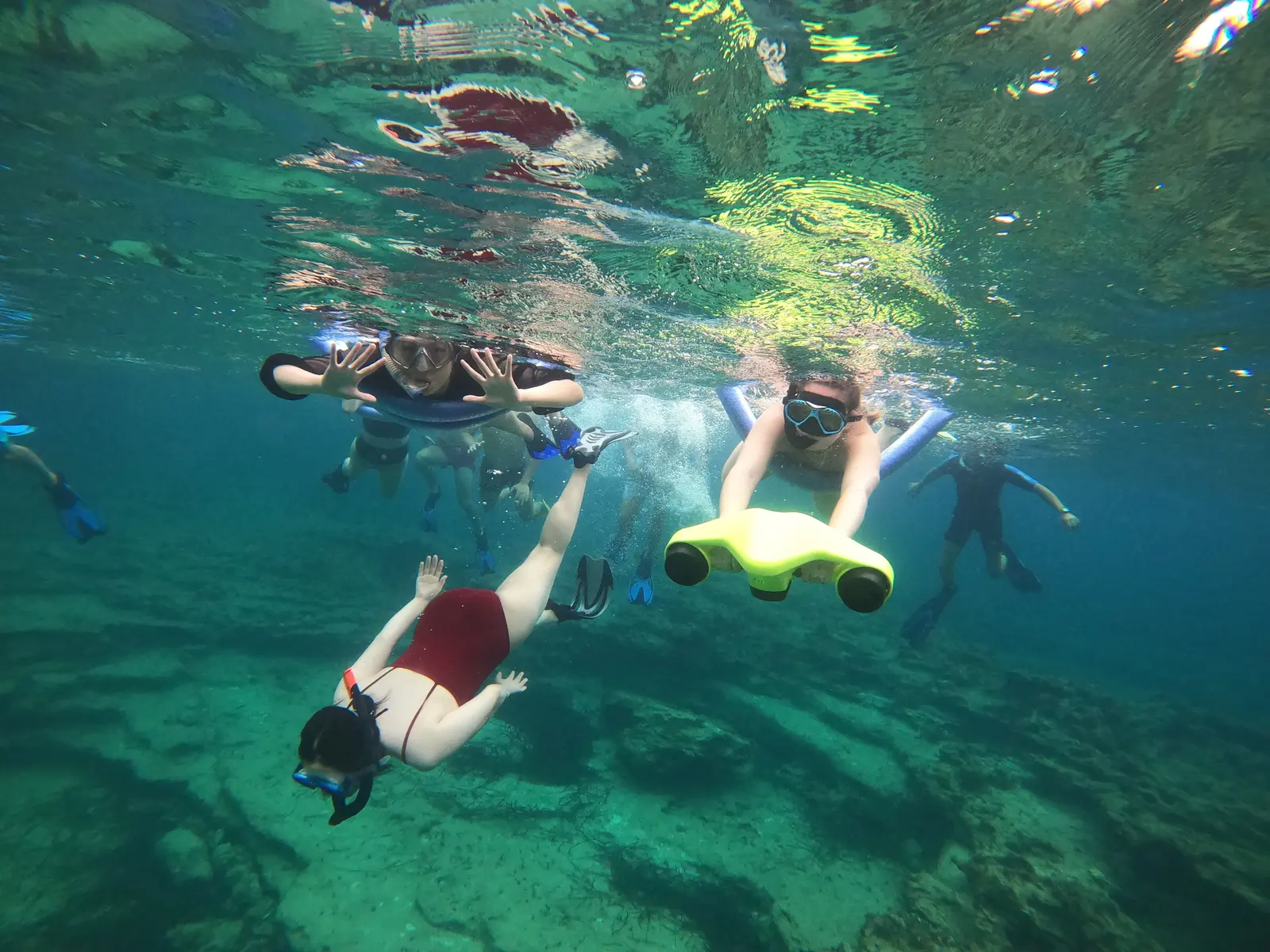
- Swimming ability
- Shore snorkel trips usually ask for confident swimmers, as you may need to swim some distance to find turtles. Glass-bottom boats and most cruises suit non-swimmers.
- Children
- Minimum ages for sea scooter snorkels range from 6 to 10. Where younger children are accepted, they must be good swimmers and stay with a parent.
- Health
- Operators commonly advise against snorkel trips for people with asthma or heart conditions, and some set an upper age guide of 65.
- Scuba
- Introductory dives start at age 10. Everyone fills in a medical questionnaire, and some answers mean a doctor must sign you fit to dive first.
Always check the conditions of the operator you book, and tell them about any health condition before the day.
Try scuba diving in Cyprus
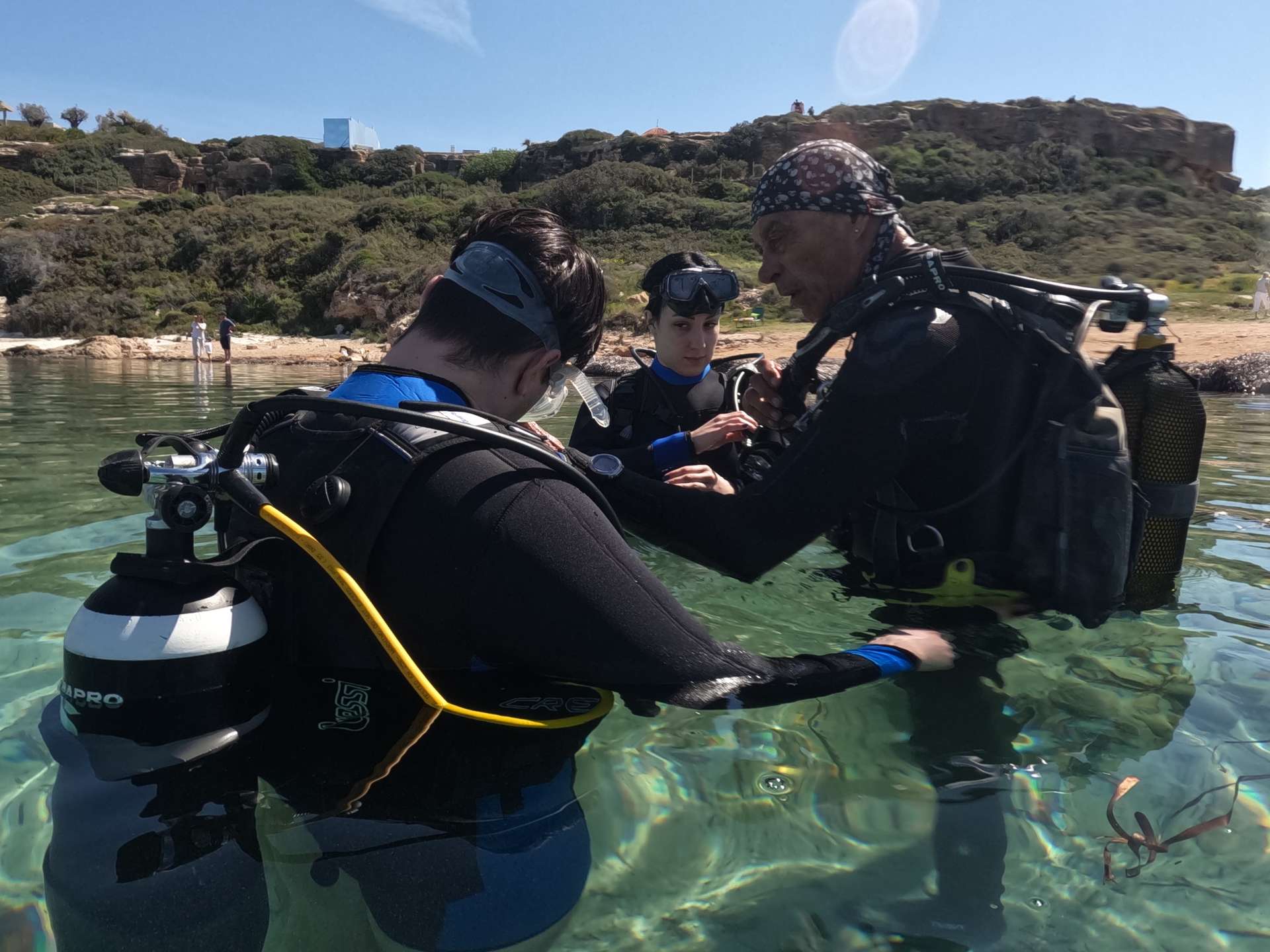
Cyprus is a good place for a first dive: warm, clear water and shallow sites close to the shore. You can try a single introductory dive with no experience, or train over a few days for a qualification that lets you dive anywhere.
Turtles are sometimes seen on dives around Cyprus, but treat that as a bonus.
Ways into scuba
7 trips to book
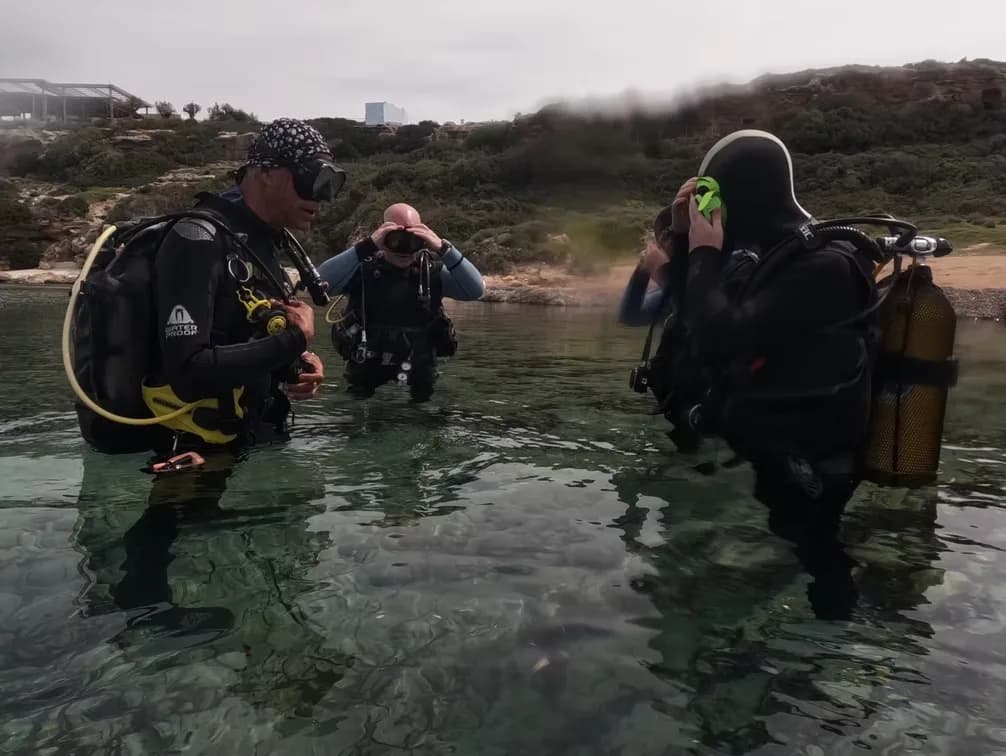
Discover Scuba, an introductory dive
Breathe underwater with an instructor beside you. No experience and no qualification needed.
- Where
- Dive centres across Cyprus, often from a shallow beach entry.
- Check first
- The depth: PADI allows up to 12 metres, but many centres keep it shallower. Ask about group size and photos.
- Price on this site
- From €80 per person
- How long
- Half a day, including the briefing and equipment fitting.
- Suits
- Beginners aged 10 and over who are comfortable in the water.
4 trips you can book here
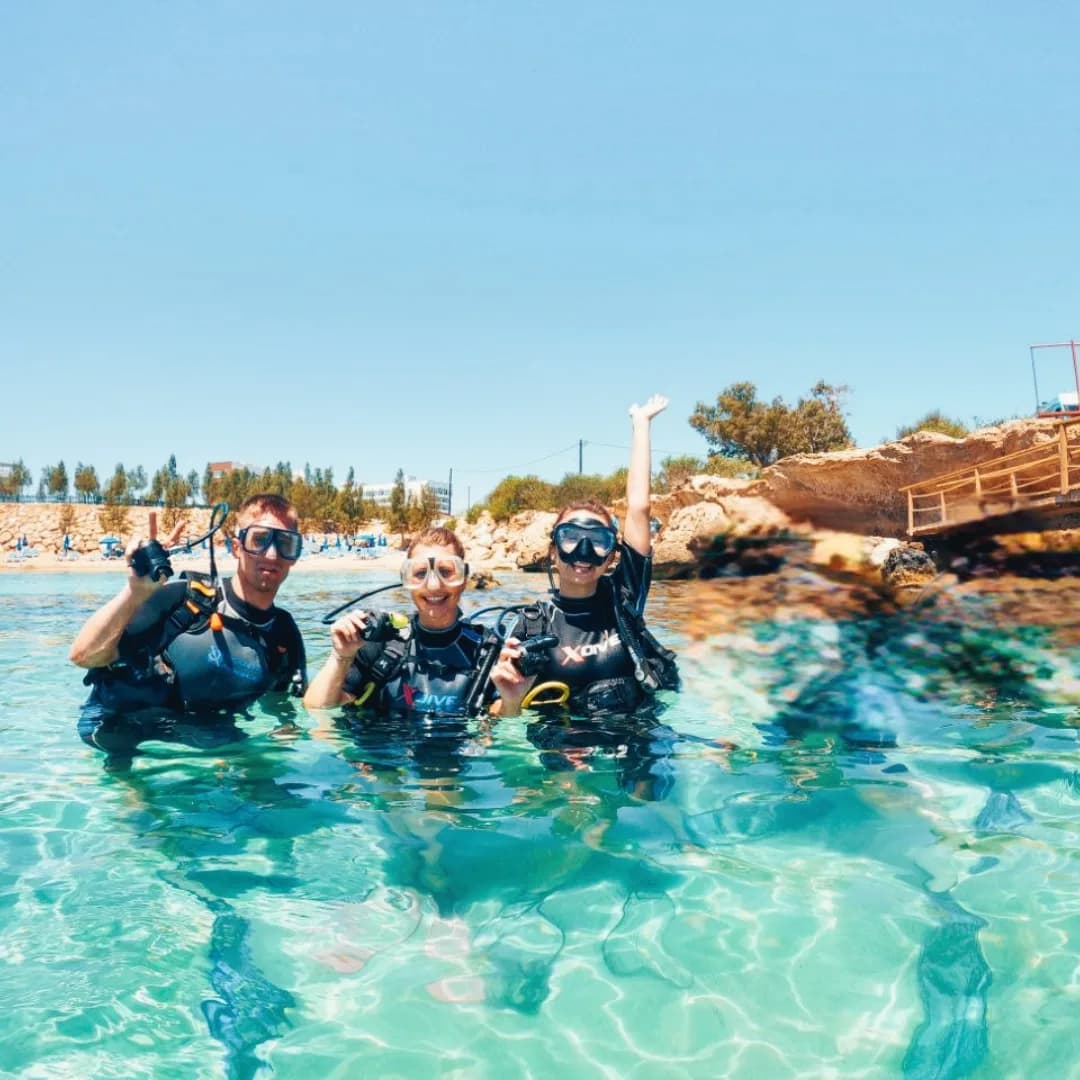
Protaras, Cyprus
Discover Scuba Diving
Discover Scuba Diving in Cyprus Take your first plunge into the incredible underwater world of Cyprus with our Introductory Scuba Diving Experience! Perfect for beginners, this is your gateway to exploring the depths ...
Small group · max 10
Free cancellation up to 24 hours before
2.25h
From €80 / person
View Activity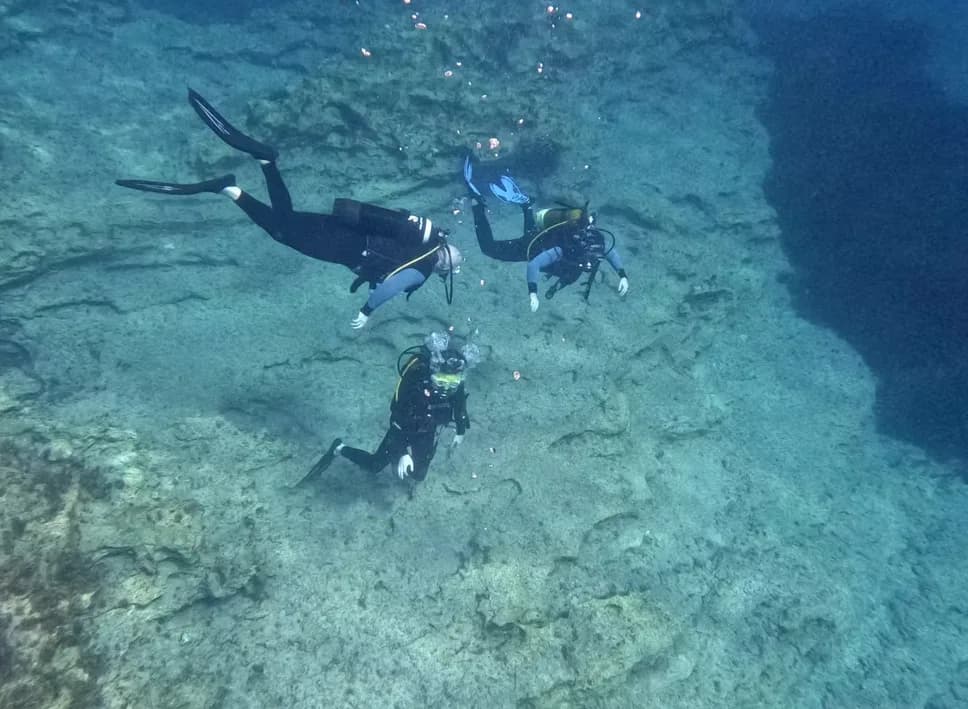
Paphos, Cyprus
Discover Scuba Diving (Paphos)
Take your first breath underwater with a beginner scuba diving experience in Paphos. Explore local marine life in a group of no more than four, with no previous experience or certification needed. Suitable for ages 10 and above.
Small group · max 10
Free cancellation up to 24 hours before
4h
From €90 / person
View Activity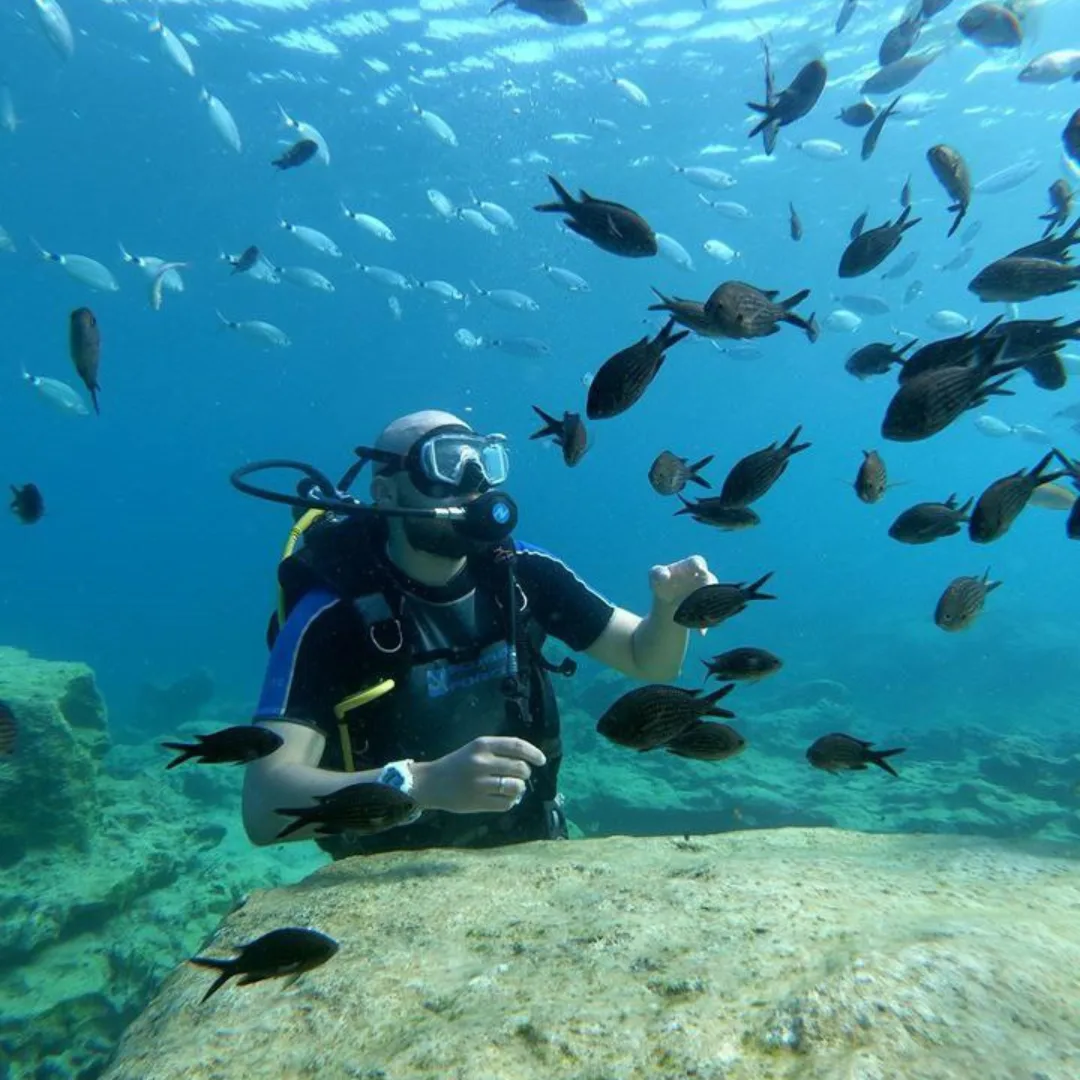
Protaras, Cyprus
Scuba Intro & Safari Combo
Scuba Intro & Safari Combo: Dive into Adventure!
Small group · max 10
Free cancellation up to 24 hours before
3.75h
From €100 / person
View Activity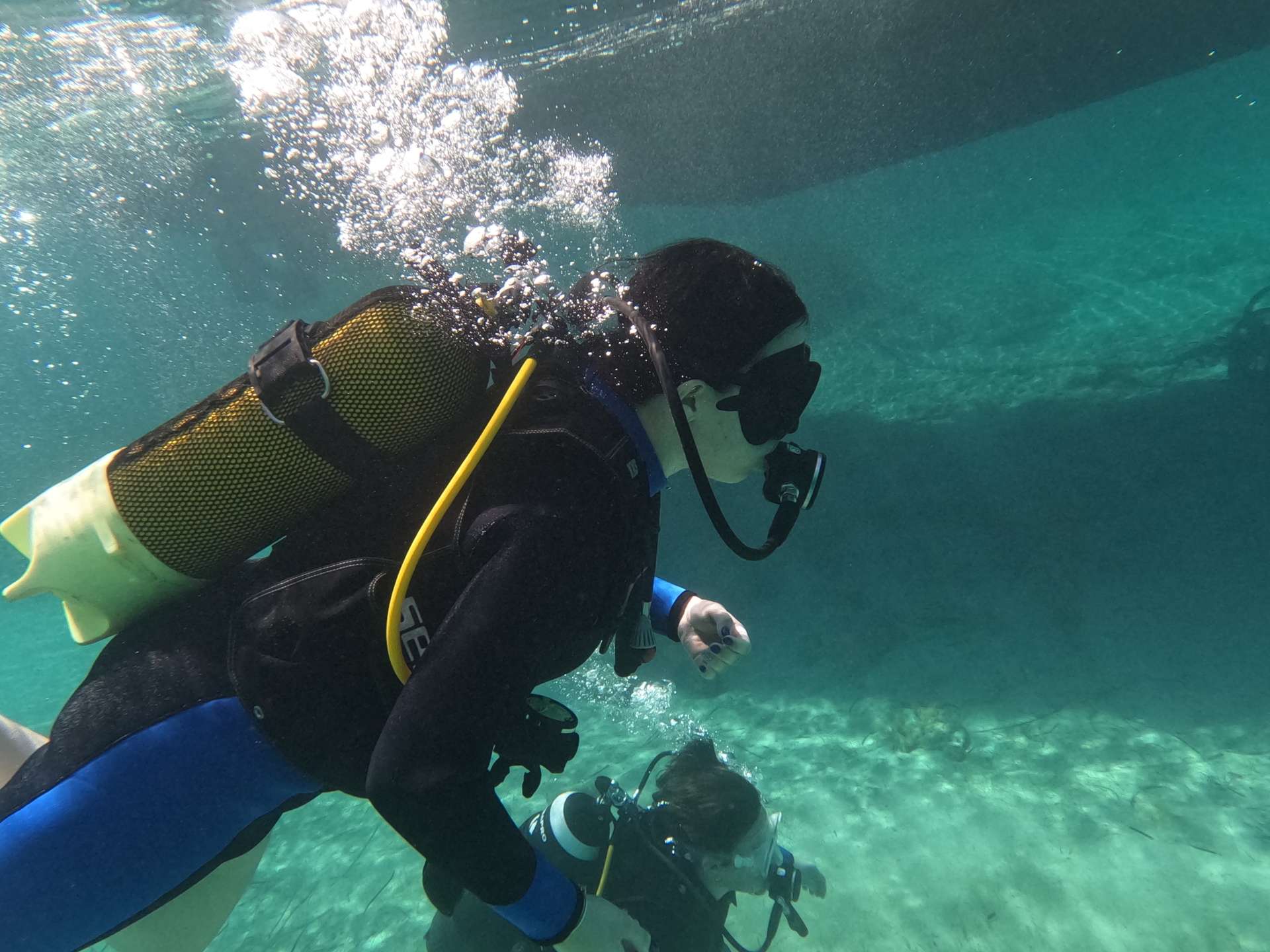
Open Water course
The first full qualification: dive with a buddy, without an instructor, to 18 metres.
- Where
- Dive centres across Cyprus, with theory often done online first.
- Check first
- Which agency certifies you, how many open water dives are included, and the swim test: PADI asks for 200 metres and a 10 minute float.
- Price on this site
- From €480 per person
- How long
- Usually 3 to 5 days.
- Suits
- Anyone who wants to keep diving. Junior courses start at 10, with a 12 metre limit for ages 10 and 11.
3 trips you can book here
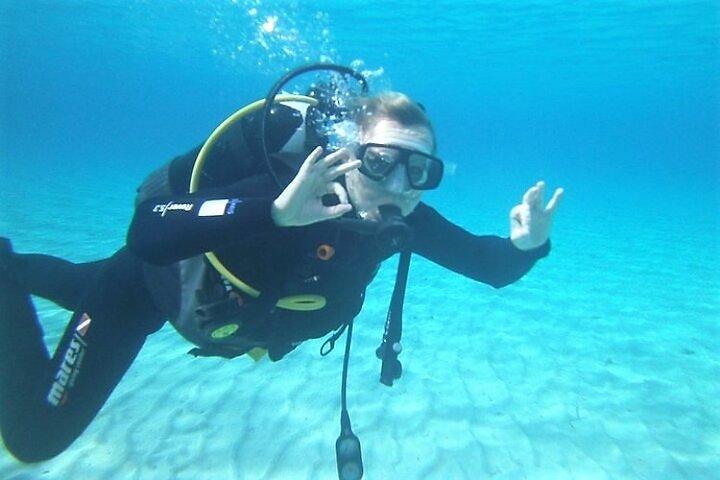
Latchi, Cyprus
Scuba Diver Course
Start your underwater adventure with the PADI Scuba Diver Course! Learn the basics of diving with professional instructors and earn your certification to dive up to 12m safe, fun, and unforgettable.
Free cancellation up to 24 hours before
2 days
From €415 / person
View Activity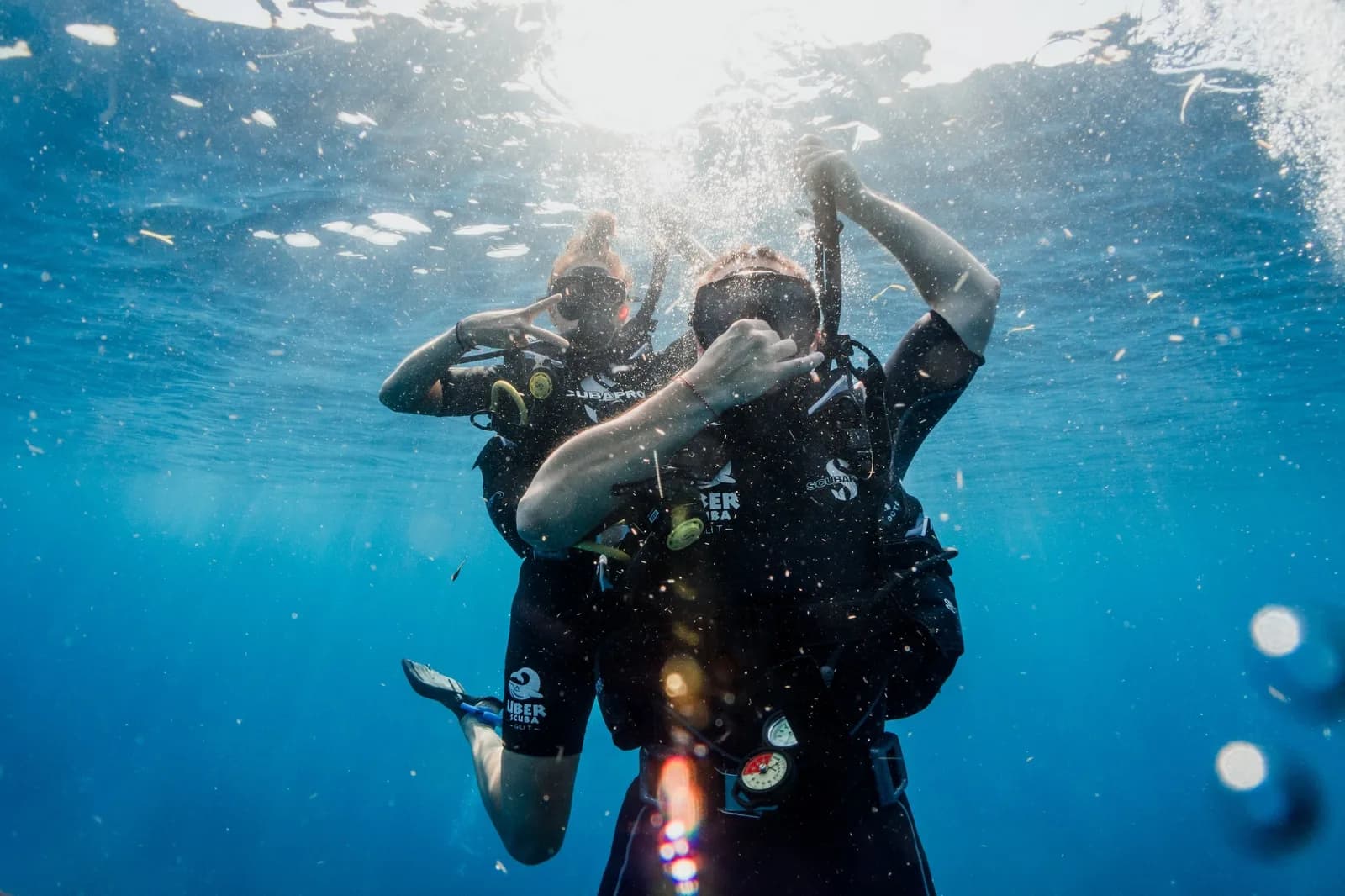
Ayia Napa, Cyprus
Open Scuba Diver Course (Ayia Napa)
Get Your Open Water Scuba Diver Certification!
Small group · max 10
Free cancellation up to 24 hours before
1h
From €480 / person
View Activity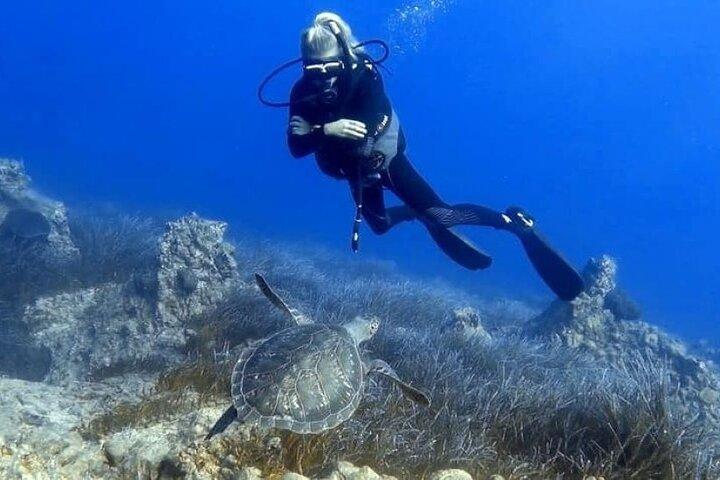
Latchi, Cyprus
Achieve your PADI OPEN WATER DIVER cert (2-3 days).
Take advantage of our 5 star IDC Dive Centre & all the above by achieving your PADI Open Water Dive Course with us.
Free cancellation up to 24 hours before
3 days
From €595 / person
View Activity Photo: Easydivers, CC BY-SA 4.0
The Zenobia wreck, for certified divers
A roll-on roll-off ferry that sank off Larnaca in 1980 and now lies on its side on the seabed.
- Where
- About 1.5 kilometres off Larnaca.
- Check first
- The depth, about 16 to 42 metres, and the certification and logged dives the centre asks for.
- Typical price
- About €110 to €180 for two dives.
- How long
- Half a day for two dives, or a full day with transport from other towns.
- Suits
- Certified divers, usually at Advanced Open Water level with recent dives. Not for beginners.
Scuba diving in Cyprus: when, where and what you need
A short practical guide before you book a dive.
- When to dive
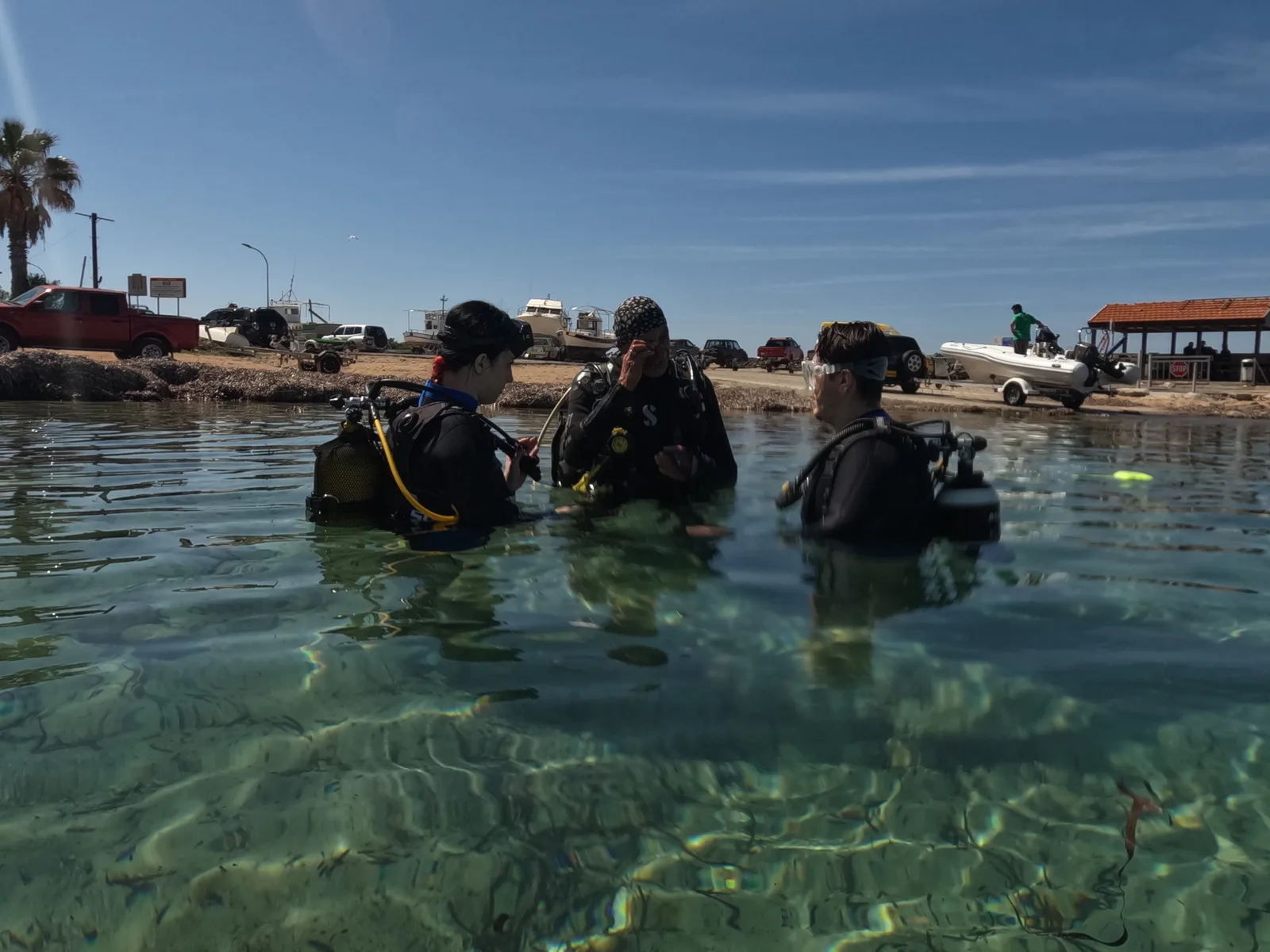
- Diving runs all year. The water is warmest from May to November, and visibility is typically 20 metres or more. Your dive centre supplies a wetsuit suited to the month.
- Shallow sites for new divers
- Green Bay near Protaras (about 11 to 12 metres, with replica statues), MUSAN, the underwater sculpture museum off Ayia Napa (8 to 10 metres, more than 90 works), and Amphitheatre near Coral Bay in Paphos (4 to 12 metres). Levels vary by centre, so always ask.
- The medical form
- Before any dive you fill in a short medical questionnaire. A yes to certain questions, such as recent asthma, a heart condition or some medication, means a doctor must sign you as fit to dive first. If you are pregnant or trying to become pregnant, do not dive.
- Swimming ability
- For an introductory dive you do not need to be a strong swimmer, but you should be comfortable in the water. Certification courses include a swim test.
- Flying after diving
- Wait 24 hours before you fly. That is the advice of PADI, the Cyprus Tourism Organisation and Cyprus dive centres. DAN's minimum is 12 hours after a single dive and 18 hours after several dives. Plan your dives for the days before you fly home.
What to bring
- For snorkelling
- Swimwear, a towel, drinking water and a rash vest. Ask whether masks, snorkels and fins are provided, or bring your own for a better fit.
- For diving
- Swimwear, a towel and a change of clothes. Certified divers should bring their certification card and logbook.
- Sun protection
- Choose a mineral, non-nano sunscreen, and wear a rash vest or hat so you need less of it in the water.
Frequently asked questions
Can you swim with turtles in Cyprus?
Yes. Turtles feed in shallow coastal water around Cyprus, especially from May to November. You can snorkel from the shore on your own, join a guided snorkel or take a boat trip. They are wild animals, so a sighting is never guaranteed, and you should watch them from a distance rather than swim up to them.
Are turtle sightings guaranteed?
No. Turtles move freely and every trip is different. Be wary of any trip that promises turtles: feeding them to make sightings reliable harms them and counts as harassment.
What is the best time to see turtles in Cyprus?
May to November is the main season, and trips start in April. April and early May are the least certain months. Turtles also nest from about mid-May to the end of September.
Where is the best place to see turtles in Cyprus?
Turtles are most often reported from shore on the Protaras and Cape Greco coast, including Green Bay and Konnos. On the Paphos coast, guided shore trips have a good chance in season. Latchi, the Akamas coast and Limassol are possible, but no sighting figures exist.
How much does it cost to see turtles in Cyprus?
Snorkelling from the shore is free. Glass-bottom boats were listed at about €20 to €30 in Paphos, Latchi lagoon cruises from about €25 per adult, or about €35 with a shuttle from Paphos, and guided snorkel trips with sea scooters from about €50. Other cruise prices vary, so check with the operator.
Which turtles live in Cyprus?
Two species nest in Cyprus: the green turtle and the loggerhead. Both have been protected by law since 1971.
Can I touch or feed the turtles?
No. Touching, feeding, chasing or crowding a turtle is harassment of a protected species, which can lead to a fine of up to €17,000, up to three years in prison, or both. Watch from a distance and move away if a turtle seems disturbed.
Can children or non-swimmers see turtles?
Non-swimmers can look from a glass-bottom boat or a cruise. For snorkel trips, operators usually ask for confident swimmers, and minimum ages range from 6 to 10. Check the conditions of the trip you book.
Do I need to swim to try scuba, and how deep does it go?
You do not need to be a strong swimmer for an introductory dive, but you should be comfortable in the water. The minimum age is 10, and under PADI rules the dive goes no deeper than 12 metres. Many centres keep it shallower.
Can I fly after diving?
Wait 24 hours before you fly. That is the advice of PADI, the Cyprus Tourism Organisation and Cyprus dive centres. DAN's minimum is 12 hours after a single dive and 18 hours after several dives.
Sources and photo credits
Turtle facts and rules come from the Department of Fisheries and Marine Research, as published in Cyprus Mail and Travel Trade Cyprus, and from the Deputy Ministry of Tourism. Diving facts come from PADI, DAN and the Cyprus tourism boards. Prices are booking-site listings checked in November 2026.
Guide researched on 5 and 6 November 2026.
Other photographs are from the Cyprus Bucket List collection and the galleries of trips listed on this site.
- Cyprus Mail: Fisheries Department advisory on turtle sightings (2022)
- Cyprus Mail: do not harass turtles (2023)
- Cyprus Mail: turtle nesting season notice (2025)
- Cyprus Mail: Fisheries Department ahead of nesting season (2021)
- Cyprus Mail: Fisheries Department beach rules (2020)
- Travel Trade Cyprus: protection of sea turtles notice
- Deputy Ministry of Tourism: strategy for diving tourism in Cyprus
- Cyprus Mail: the turtle conservation programme and MedTRACS (2023)
- MedTRACS public page
- Cyprus Mail: more than 2,000 turtle nests (2022)
- Mongabay: green turtle moves to Least Concern (2025)
- Paphos Life: return to Lara Bay (2021)
- Cyprus snorkelling sites guide
- Guide to Paphos: shore turtle snorkel listing
- Expedia: Paphos glass-bottom boat listing
- Orbitz: Protaras Blue Lagoon and Turtle Cove boat trip listing
- Expedia: Zenobia shipwreck dives listing
- Sea temperature in Paphos, monthly averages
- Visit Cyprus: diving
- Visit Famagusta: diving spots
- PADI: Discover Scuba Diving questions
- PADI: diver medical questionnaire
- DAN: guidelines for flying after diving
- PADI: best wreck dives in Cyprus
- Photo: Part of the Zenobia wreck lying on the seabed in deep blue water. dronepicr, CC BY 2.0, via Wikimedia Commons
- Photo: Lara Beach, a wide sandy bay with low cliffs on the Akamas peninsula. Dm Bsg, CC BY 3.0, via Wikimedia Commons
- Photo: Flowering dune plants above Toxeftra beach on the west coast of Cyprus. Krzysztof Ziarnek, Kenraiz, CC BY-SA 4.0, via Wikimedia Commons
- Photo: A green turtle swimming up towards the surface over a pale seabed. Brocken Inaglory, CC BY-SA 3.0, via Wikimedia Commons
- Photo: A loggerhead turtle crawling back to the sea across a sandy beach. Savvas Michaelides, CC BY-SA 4.0, via Wikimedia Commons
- Photo: Scuba divers swimming beside the hull of the Zenobia wreck. Easydivers, CC BY-SA 4.0, via Wikimedia Commons